
Buy Authentic Mexican Artisan Jewelry: A 2026 Guide
Table of Contents
- What Makes Authentic Mexican Artisan Jewelry Worth Buying
- How to Date Taxco Silver Jewelry Pieces and Verify Age
- Mexican Silver Hallmarks Guide: Reading Authenticity Markers
- Fair Trade Mexican Artisan Jewelry: What You Need to Know
- Taxco Silver Craftsmanship and Traditional Techniques
- Styling Handcrafted Silver for Everyday and Special Occasions
- Investment Value and Durability of Artisan Silver Pieces
- Frequently Asked Questions
Last Updated: September 23, 2026
What Makes Authentic Mexican Artisan Jewelry Worth Buying
When you buy authentic mexican artisan jewelry, you're investing in cultural heritage, ethical craftsmanship, and pieces designed to last decades. Silver Mexican Treasures works directly with Taxco artisans who use techniques passed down through generations. The difference between mass-produced and handcrafted silver comes down to three factors: material quality, artisan skill, and sourcing transparency.

Authentic Mexican artisan jewelry commands higher prices because each piece is hand-formed using certified .925 sterling silver (92.5% pure), ensuring durability and lasting shine. The handmade process means no two pieces are identical, what you receive is truly one-of-a-kind.
A well-maintained artisan silver piece holds value through precious metal content, human artistry, and cultural significance. More importantly, you'll actually wear it, unlike trendy pieces that end up in a drawer.
Fair trade sourcing adds another layer of value. When you buy from Silver Mexican Treasures, your money reaches artisans directly with no middlemen or markup chains. This transparency matters if you care about supporting artisans and preserving traditional craftsmanship in communities where silversmithing is a primary livelihood.
How to Date Taxco Silver Jewelry Pieces and Verify Age
Dating authentic authentic mexican artisan jewelry requires examining three markers: hallmarks, maker's marks, and design characteristics. Taxco became the center of Mexican silver production in the 1930s, and pieces from different eras carry distinct signatures.
Identify the maker's mark or initials stamped into the piece. These marks prove authenticity and establish provenance.
Design style offers dating clues.
Authentic aged silver develops natural oxidation darkening in crevices and textured areas. Genuine sterling silver ages gracefully.
Mexican Silver Hallmarks Guide: Reading Authenticity Markers
Understanding .925 Sterling Silver Standards
The ".925" marking on authentic buy authentic mexican artisan jewelry is a legal requirement in Mexico. This hallmark certifies at least 925 parts pure silver per 1,000 total, with the remaining 75 parts typically copper, which strengthens the silver and ensures durability.
Mexican law requires all silver jewelry to carry this marking. If a piece claims to be Mexican silver but lacks a hallmark, it's counterfeit or misrepresented. The hallmark is stamped on the inside of rings, bracelet clasps, or pendant backs.
.925 silver resists rapid tarnishing and oxidation, holds its shape under normal wear, and maintains resale value because the metal content is guaranteed and verifiable.
Consejo Regulador de la Plata Certification
The Consejo Regulador de la Plata (Silver Regulatory Council) is Mexico's official governing body for silver standards and artisan certification. Consejo membership signals rigorous quality standards and fair trade practices. Silver Mexican Treasures partners exclusively with Consejo-registered artisans, ensuring every piece comes from verified, certified craftspeople.
Consejo certification creates accountability, a registered artisan's reputation depends on maintaining quality. Their mark is their brand. You're buying from someone whose livelihood depends on consistent excellence, not factory optimization.
The Consejo maintains records of registered makers, helping verify authenticity.
Fair Trade Mexican Artisan Jewelry: What You Need to Know
Fair trade means the artisan receives a guaranteed price paid directly without exploitative middlemen. When you buy authentic mexican artisan jewelry labeled as fair trade, you're funding the artisan's ability to continue their craft, support their family, and train the next generation.
Verify fair trade claims through transparency. Silver Mexican Treasures maintains direct relationships with artisan partners and can tell you who made your piece, how much they were paid, and what that payment means for their community.
Fair trade pricing reflects fair compensation. A living wage allows artisans to invest in quality materials and create pieces with genuine care. The price reflects better craftsmanship and ethical sourcing.
Belt Ring - Handmade Statement .925 →
Artisans paid fairly stay in their craft, allowing silversmithing communities to survive and traditional techniques to persist. Your purchase directly supports cultural preservation.
Taxco Silver Craftsmanship and Traditional Techniques
Taxco's reputation as Mexico's silver capital rests on centuries of refined technique. Artisans use hand-forging, hand-sculpting, and filigree work, methods that cannot be rushed or automated and require years of apprenticeship to master.
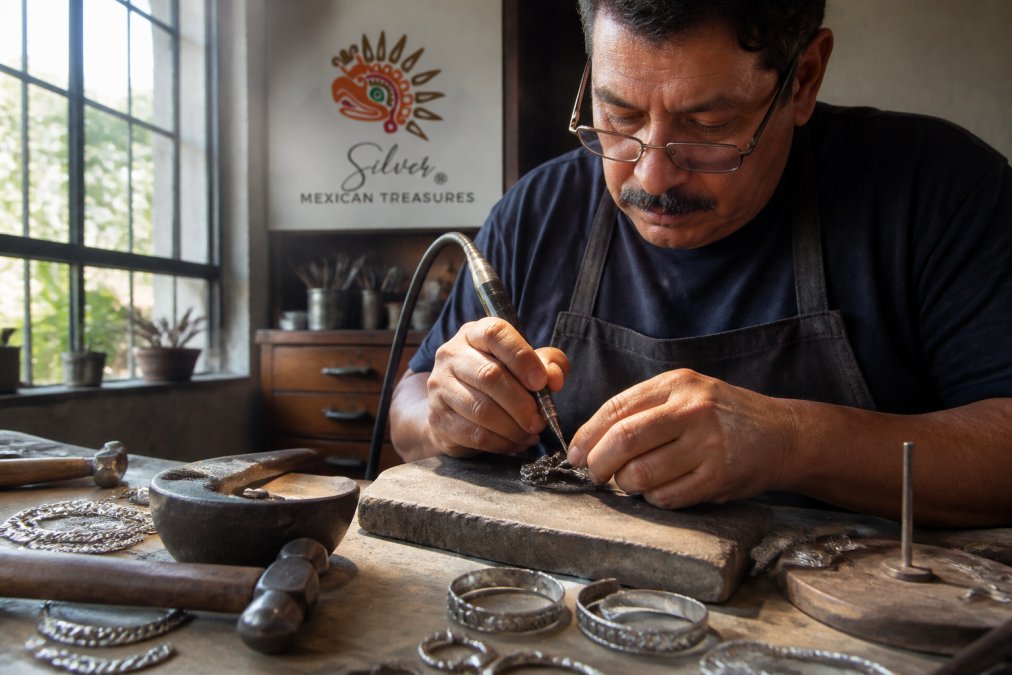
Hand-forging involves molten silver poured into molds or shaped by hammer and anvil. Repeated heating and slow working strengthens the silver and creates subtle texture variations that give each piece character, unlike machine-stamped silver's identical copies.
Filigree work represents the highest expression of Taxco craftsmanship. Artisans twist thin silver wires and solder them into intricate patterns, like creating lace from metal. Filigree work requires a steady hand, metallurgical knowledge, and an eye for proportion, which is why filigree pieces command premium prices.
Oxidation and patination are deliberate finishing techniques. Artisans apply chemicals to darken silver in specific areas, creating contrast and depth. A Calavera ring uses oxidation to shadow the skull's eye sockets and define features, adding visual drama and cultural authenticity.

Taxco artisans preserve pre-Columbian techniques blended with Spanish colonial methods from the 16th century, creating jewelry that honors both indigenous and European heritage.
Styling Handcrafted Silver for Everyday and Special Occasions
Authentic mexican artisan jewelry works across contexts when you treat statement pieces as anchors rather than competing elements.
For everyday wear, let a single bold piece carry visual weight. The Belt Ring works beautifully alone, paired with a simple linked chain necklace for an intentional look. Keep other jewelry minimal, simple studs or a delicate bracelet, nothing that competes for attention.

Layering multiple artisan pieces requires restraint. If you're wearing a statement ring, choose a necklace with quieter lines. If you're wearing a detailed filigree pendant, skip the bracelet or opt for something with clean geometry. The principle is balance, let each piece breathe rather than creating visual clutter.
For special occasions, bold is better. A Calavera ring with oxidized detailing and substantial weight becomes a conversation starter at dinner. Pair it with a simple black dress or tailored suit and the ring becomes the focal point. The craftsmanship deserves that spotlight. Similarly, a statement pendant in hand-sculpted silver can anchor an entire formal outfit.
Color coordination matters less with silver than with gold. Silver works with nearly every skin tone and pairs seamlessly with both warm and cool color palettes. This versatility is one reason artisan silver jewelry remains a smart investment, it transcends seasonal trends.
The durability of handcrafted .925 silver means these pieces can handle daily wear.
Investment Value and Durability of Artisan Silver Pieces
The emotional investment matters too. You're not just buying metal and craftsmanship, you're buying a story. The artisan who created your piece has a name, a workshop, a community. When you know that story, the piece becomes irreplaceable. This is why fair trade sourcing and direct artisan partnerships add real value beyond material content.
| Consideration | What It Means | Why It Matters |
|---|---|---|
| .925 Hallmark | Certified 92.5% pure silver content | Guarantees durability, resale value, and authentic material |
| Maker's Mark | Artisan's registered initials or symbol | Establishes provenance and supports accountability |
| Fair Trade Sourcing | Direct payment to artisan without middlemen | Ensures ethical compensation and cultural preservation |
| Hand-Forged Technique | Metal shaped by hammer and heat, not machines | Creates unique variations and stronger, more durable pieces |
| Filigree Work | Twisted silver wires soldered into intricate patterns | Represents highest craftsmanship; requires years of skill |
| Oxidized Finish | Deliberate darkening for contrast and depth | Adds visual drama and cultural authenticity |
Frequently Asked Questions
How can I tell if Mexican artisan jewelry is authentic?
Authentic Mexican artisan jewelry carries hallmarks identifying the maker, silver purity (.925 for sterling), and often the Consejo Regulador de la Plata mark. Look for hand-finishing marks, weight that feels substantial, and slight variations in design that indicate handcrafted production. Lab certification from accredited testing facilities provides additional verification. Reputable sellers like Silver Mexican Treasures provide documentation and lab-certified pieces, ensuring you receive genuine handmade artisan work.
What does the .925 stamp mean on Mexican jewelry?
The .925 stamp indicates certified sterling silver, meaning the piece contains 92.5% pure silver and 7.5% other metals for durability. This standard is recognized internationally and ensures high quality and lasting shine. Mexican artisans working with Consejo Regulador de la Plata members produce .925 certified pieces that maintain their beauty for years with proper care. This purity level balances durability with the precious metal content that makes artisan silver valuable.
How do I date Taxco silver jewelry pieces and understand their value?
Dating Taxco silver involves examining hallmarks, maker's marks, and production techniques. Pieces from different decades show distinct design styles and finishing methods. Consejo Regulador de la Plata registration numbers help identify artisan workshops. The weight, complexity of hand-sculpting, and gemstone quality also indicate craftsmanship level. Handcrafted pieces can be a meaningful investment when authenticated and maintained properly.
Why is fair trade Mexican artisan jewelry more expensive than mass-produced silver?
Fair trade artisan jewelry costs more because each piece is handcrafted by skilled artisans who receive fair compensation for their labor and expertise. Mass production uses machinery and lower wages, cutting costs but sacrificing authenticity and quality. Artisan pieces like the Belt Ring ($55) and Calavera Ring ($225) represent direct support to Mexican women artisans and their families, sustainable manufacturing practices, and one-of-a-kind designs. The durability and lasting beauty justify the investment, customers report their pieces remaining shiny and beautiful for years.