
Ethical Mexican Jewelry Brands 2026
Table of Contents
- What Defines Ethical Mexican Jewelry
- How to Date Taxco Silver Jewelry Pieces
- Authentic Mexican Silver Hallmarks and Certification
- Fair Trade Practices and Artisan Support
- Sustainable Materials and Supply Chain Transparency
- Top Ethical Mexican Jewelry Pieces for Every Style
- How to Spot Greenwashing and Verify Authenticity
- Why Ethical Mexican Jewelry Costs More
- Frequently Asked Questions
Last Updated: September 27, 2026
What Defines Ethical Mexican Jewelry
Ethical Mexican jewelry means verifiable practices across three dimensions: environmental responsibility, artisan welfare, and cultural authenticity. The supply chain is transparent, artisans are paid fairly, and materials are sourced responsibly.
Greenwashing is rampant in the jewelry industry. Authentic ethical Mexican jewelry comes from makers who can trace their materials, document their labor practices, and prove their environmental commitments. Silver Mexican Treasures prioritizes direct partnerships with artisans, lab-certified materials, and transparent sourcing.
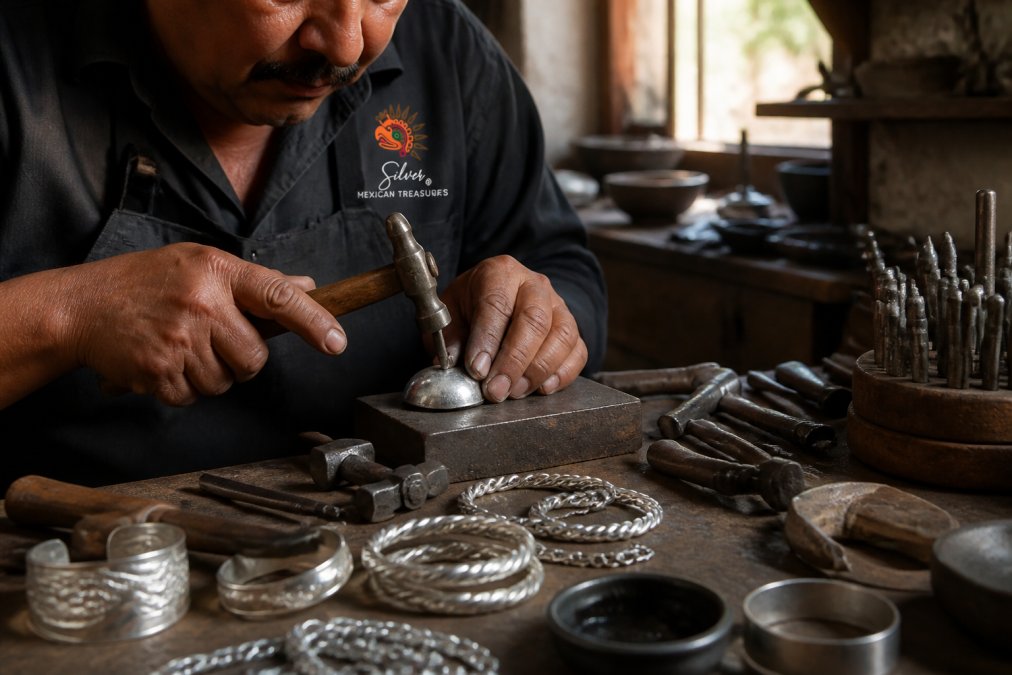
Ethical Mexican jewelry honors cultural heritage by respecting indigenous design traditions and pre-Hispanic motifs without appropriating them. Hand-formed sterling silver and traditional techniques passed through generations become part of the ethical value, supporting the preservation of Mexican artisan traditions.
How to Date Taxco Silver Jewelry Pieces
Dating Taxco silver jewelry requires understanding hallmarks, production techniques, and historical context. Taxco has been the epicenter of Mexican silver production since the 1930s, with distinctive markers revealing age and authenticity.
Examine the hallmark first. Taxco pieces typically bear a maker's mark or shop stamp alongside .925 sterling silver certification. Older pieces (1940s-1960s) feature irregular, deeply impressed hand-stamped marks; modern pieces use precise, consistent stamping. Hand-stamped marks show more variation and wear.
Weight and patina tell a story. Genuine vintage Taxco silver develops specific oxidation patterns reflecting decades of handling and storage. Contemporary pieces start bright and polished, developing patina gradually with wear. If a piece claims to be vintage but has no patina or uniform oxidation, it's likely newer.
Construction technique reveals age. Vintage Taxco pieces show hand-finishing marks, irregular solder joints, visible file marks, or asymmetrical weight distribution. Modern handcrafted pieces are more refined but retain hand-work character. Machine-made jewelry shows no variation.
Authentic Mexican Silver Hallmarks and Certification
Authentic Mexican silver hallmarks serve as the jewelry's passport, revealing metal content, maker's identity, and production era. Understanding these marks distinguishes genuine ethical Mexican jewelry from counterfeits.
The most critical hallmark is the silver content stamp. Mexican law requires all sterling silver jewelry to bear ".925" or "925" marking, indicating 92.5% pure silver. Pieces without this mark are not genuine sterling silver. Silver Mexican Treasures ensures all pieces are lab-certified .925 sterling silver with certification from The Silver Laboratory.
The maker's mark or shop stamp comes next. In Taxco, artisans register unique stamps with the Consejo Regulador de la Plata (Silver Regulatory Council). A legitimate Taxco piece bears a registered maker's mark. Silver Mexican Treasures works with artisans who are members of the Consejo Regulador de la Plata.
Additional marks may include a country-of-origin stamp ("Mexico" or "Hecho en Mexico") and sometimes an assay mark from independent testing. The presence of these marks, combined with consistent stamping and professional presentation, indicates authentic ethical Mexican jewelry. Conversely, pieces with faint, inconsistent, or missing hallmarks warrant skepticism.
Fair Trade Practices and Artisan Support
Fair trade in Mexican jewelry means direct payment to artisans, transparent pricing structures, and long-term partnerships that value craftsmanship over cost-cutting.
Fair trade ensures artisans receive living wages for hand-forming sterling silver and applying traditional techniques. Many conventional retailers source through middlemen who strip away most value. Ethical producers like Silver Mexican Treasures eliminate middlemen, working directly with artisan communities.
Fair trade practices include workplace safety, reasonable working hours, and family support. Silver Mexican Treasures supports women artisans in Taxco, recognizing their crucial role in preserving traditional silvercraft while managing family responsibilities.
Documentation and transparency are hallmarks of genuine fair trade jewelry. Ethical retailers can explain where their pieces come from, which artisans made them, and how payment structures work. They publish information about their partnerships and often share stories of the artisans behind the work. If a retailer cannot answer these questions or deflects with vague claims, their "fair trade" label is marketing, not practice.
| Fair Trade Element | What It Means | How to Verify |
|---|---|---|
| Direct Artisan Payment | Artisans receive fair wages without middlemen | Retailer provides payment documentation or artisan stories |
| Transparent Pricing | Retailer explains cost breakdown | Price reflects artisan wages, materials, and fair markup |
| Long-Term Partnerships | Ongoing relationships with specific artisans | Retailer names artisans or communities; shows repeat work |
| Safe Working Conditions | Workshops meet safety and labor standards | Retailer provides workshop information or certifications |
| Community Support | Income benefits artisan families and communities | Retailer describes community programs or initiatives |
Sustainable Materials and Supply Chain Transparency
Sustainable materials in ethical Mexican jewelry focus on responsibly sourced sterling silver and lab-grown gemstones. Environmental impact includes mining practices, processing chemicals, and transportation emissions.
Sterling silver should come from recycled sources or environmentally responsible mines. Recycled silver eliminates mining damage while maintaining quality and purity.
Supply chain transparency means tracing jewelry from raw material to finished piece. Ethical retailers document sourcing, provide certificates of origin, and explain manufacturing processes. This ensures traditional techniques are genuinely used and artisans are credited.
Top Ethical Mexican Jewelry Pieces for Every Style
Statement Rings with Heritage Craftsmanship
Statement rings handcrafted from certified .925 sterling silver become conversation pieces reflecting artistry and values. The Belt Ring exemplifies this with its sculptural belt-inspired design and polished finish, at $55.00.

Lightweight Chains for Everyday Elegance
The Slim Chain at $60.00 delivers delicate sophistication. At 4.5 grams, it's comfortable for all-day wear and ideal for layering.

Bold Earrings Inspired by Pre-Hispanic Design
The Pre-Hispanic Earrings at $55.00 honor Mexican cultural heritage with hand-hammered motif work. At 3.5 centimeters and 3.4 grams, they deliver statement impact without weight, celebrating pre-Hispanic design while ensuring fair artisan compensation.

Textured Chokers and Bracelets
Textured pieces add dimension to any collection. The Trenzada Choker at $165.00 features hand-braided design that creates genuine visual depth. Its 5-millimeter width strikes a balance between presence and wearability, and the slip-on choker style makes it easy to wear with any neckline. The Tallada Bracelet at $125.00 brings carved-inspired texture to the wrist. Both pieces demonstrate how ethical Mexican jewelry rewards closer inspection; the texture reveals the artisan's hand in every detail.
Formal Accessories and Meaningful Charms
For formal occasions, the Torzal Cuff Links at $95.00 elevate dress shirts with subtle artisan character. Their twisted torzal design adds more personality than plain cuff links while maintaining the understated elegance formal wear demands. The Tortuga Pendant at $35.00 serves as a meaningful charm, whether worn alone on a chain or added to a bracelet collection. Its turtle symbolism connects to nature and longevity, making it a gift with genuine significance.
How to Spot Greenwashing and Verify Authenticity
Greenwashing in jewelry retail is sophisticated. Brands use environmental language and vague sustainability claims without substantive proof. Learning to distinguish genuine commitment from marketing fiction protects your values and investment.
Why Ethical Mexican Jewelry Costs More
The price premium on ethical Mexican jewelry reflects real costs that mass-market jewelry avoids. Understanding this cost structure helps you see premium pricing not as exploitation but as fair value.
| Cost Factor | Ethical Producer | Mass Market |
|---|---|---|
| Artisan Wages | Living wage + benefits | Minimal; often through middlemen |
| Material Sourcing | Certified, recycled, or responsible | Lowest-cost available |
| Production Method | Hand-crafted, small-batch | Machine-made, mass production |
| Certifications | Lab-certified, verified | Minimal or none |
| Supply Chain Transparency | Documented, verifiable | Obscured or unknown |
| Retail Margins | Fair markup for sustainability | Maximized profit |
Frequently Asked Questions
How can I verify that ethical Mexican jewelry is actually fair trade?
Look for transparent supply chain documentation, direct artisan partnerships, and third-party certifications from organizations like the Responsible Jewellery Council. Brands that share specific artisan names, workshop locations, and fair wage commitments demonstrate genuine accountability. Ask for proof of payment structures and verify that prices reflect actual artisan compensation, not middleman markups. Ethical brands openly discuss their sourcing and invite questions about production practices.
What are authentic Mexican silver hallmarks and how do I identify them?
Authentic Mexican silver carries hallmarks indicating purity and origin. The most common marking is '.925' or '925', denoting sterling silver content. Look for 'TAXCO' stamped on pieces from that region, along with artisan maker's marks or workshop signatures. Consejo Regulador de la Plata (Silver Regulatory Council) certified pieces may include additional verification stamps. These hallmarks should be clearly visible, properly stamped (not engraved), and consistent across all metal components of the piece.
How do I date Taxco silver jewelry pieces to confirm their age and authenticity?
Dating Taxco silver requires examining hallmarks, design style, and craftsmanship techniques. Older pieces often show hand-hammering marks and varied patina, while contemporary work displays consistent polishing. Check for maker's marks, established Taxco artisans registered their stamps with authorities, creating a traceable history. The weight and thickness of the silver, combined with construction methods, indicate production era.
Why should I choose ethical Mexican jewelry over cheaper mass-produced alternatives?
Ethical Mexican jewelry offers superior durability, unique design, and social impact. Lab-certified .925 sterling silver maintains its shine for years with proper care. Each handcrafted piece is one-of-a-kind, reflecting generations of artisan skill. Your purchase directly supports Mexican women artisans and preserves traditional Taxco craftsmanship. The higher price reflects fair wages, sustainable practices, and authentic heritage work, not middleman markups.
Choosing ethical Mexican jewelry means aligning your purchases with your values. Silver Mexican Treasures makes this choice accessible by offering lab-certified .925 Taxco sterling silver pieces handcrafted by artisans who are paid fairly and credited for their work. Every piece combines traditional craftsmanship with transparent sourcing, ensuring your jewelry reflects both artistry and integrity. Explore the Collection!