
How to Choose the Perfect Silver Pendant Necklace
Quick Summary
To choose the perfect silver pendant necklace, start with the pendant's size, weight and shape, then match the chain length and width to it. Check that the bail opening lets the pendant slide freely, and confirm the piece is genuine .925 sterling silver.
- Check stated dimensions and weight, since a large pendant can be light if hollow or thin.
- Pendants under about 2 cm usually suit 16 to 18 inch chains, while larger ones suit 20 to 24 inches.
- Match chain width to pendant weight, for example 1.8 to 2.5 mm for pendants between 5 and 10 grams.
- Thread the chain through the bail and confirm the pendant slides smoothly without catching.
- Look for a 925 or Sterling stamp and check that the piece feels substantial for its size.
Table of Contents
- Start With the Pendant: Size, Weight and Shape
- Silver Necklace Chain Length Guide
- How to Choose a Necklace Chain for a Pendant
- Matching the Silver Pendant Style to Your Neckline and Look
- How to Tell If Silver Is 925 Before You Buy
- Handmade Silver vs Cast Jewelry: What to Look For
- Choosing Your First Silver Pendant Necklace From Silver Mexican Treasures
- Frequently Asked Questions
Start With the Pendant: Size, Weight and Shape
Last Updated: November 17, 2026
Choosing a silver pendant necklace starts with the pendant itself, not the chain. You can see a handmade silver pendant in this size and shape to judge proportions for yourself.
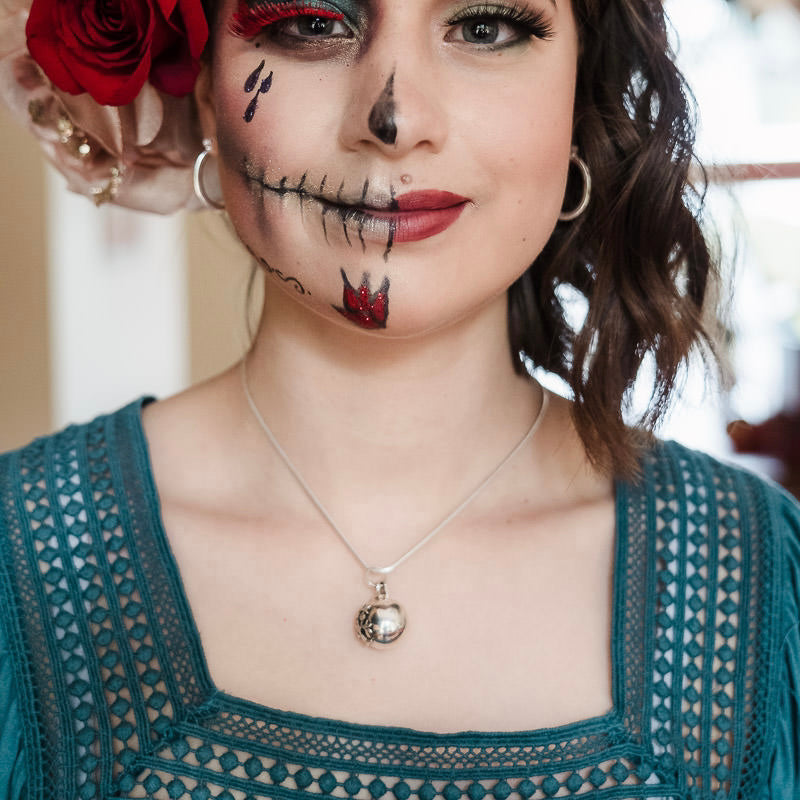
A pendant's visual size and its physical weight are two different things. A large pendant can be surprisingly light if it is hollow or thin, while a smaller solid piece can feel heavier on the neck. Check the stated dimensions and weight before you commit, because a pendant that looks right on a screen can overwhelm a delicate chain.
Shape matters just as much. Round and heart-shaped pendants read as soft and balanced, while cross and square designs look more structured. Organic or irregular shapes tend to add character without needing much styling.
Our Arbol de la Suerte Pendant is a good example of how size and shape work together.
A smaller piece is easier to layer and suits a fine chain. Our La Cruz Pendant measures 1.5 cm by 1.5 cm and weighs 0.8 grams, so it stays light even when worn with other pendants.
Silver Necklace Chain Length Guide
Chain length determines where the pendant lands on the body, and that placement changes the whole look. Most standard chains fall between 16 and 24 inches, though the best choice depends on the neckline you wear most, the size of the pendant you are pairing, and your own proportions. For more detail, read how long a sterling silver necklace should be.
A shorter chain sits close to the base of the throat and draws attention upward. A longer chain lets the pendant rest lower on the chest and works well with open necklines. Measure your existing necklaces to see which length you already reach for most often, then compare that measurement against the table below.
Pros and Cons of Each Chain Length
| Chain Length | Best For | Pros | Cons |
|---|---|---|---|
| 16 inches (choker-adjacent) | Small pendants, high necklines | Sits close and neat | Can feel tight with larger pendants |
| 18 inches | Everyday wear, crew necks | Versatile, universally flattering | Less room for statement pendants |
| 20 inches | Open necklines, layering | Balanced placement | Can tangle when layered |
| 24 inches | Statement pieces, V-necks | Long, elegant drape | Pendant can get lost under clothing |
Each length carries a trade-off. Short chains suit petite pendants but can look cramped with a larger piece. Long chains show off bigger designs but may hide a small pendant under a sweater.
Match Length to Pendant Size and Body Proportions
A pendant that measures under about 2 cm across usually reads best on a 16- to 18-inch chain, where it stays in view and does not compete with the neckline. A pendant between roughly 2 and 3 cm, like a 2.4 cm round design, has enough presence for an 18- to 20-inch chain.
Body proportions matter as much as pendant size. A shorter neck often looks best with a 16- to 18-inch chain that creates a clean vertical line, while a longer neck can carry a 20- to 24-inch chain without the pendant dropping too low.
Layering and Length Combinations
Layering works best when each chain sits at least 2 inches apart, so the pendants do not overlap or tangle. A common pattern is a 16-inch chain with a small pendant, an 18-inch chain with a medium pendant, and a 20- or 22-inch chain with a larger or more detailed piece. Keep the total number of layers to three or fewer for daily wear, and choose chains of similar metal and finish so the group reads as one look rather than a tangle of unrelated pieces.
Watch out: layering two chains at the same length causes the pendants to collide and scratch each other, so measure the drop of each chain before you combine them.
How to Choose a Necklace Chain for a Pendant
Pendant weight and chain strength should match. A heavier pendant on a fine, lightweight chain can stretch or break the chain over time. A delicate pendant on a thick, heavy chain can look out of proportion. The practical way to get this right is to check three things together: the pendant's weight, the bail opening, and the chain's width and construction.
A Practical Pendant-to-Chain Compatibility Guide
Use the pendant's weight and bail size to narrow the chain choice before you look at style.
| Pendant Weight | Suggested Chain Width | Bail Opening Needed | Notes |
|---|---|---|---|
| Under 2 grams | 0.8-1.2 mm | At least 2 mm | Fine chains suit small, light pendants; check that the bail slides freely |
| 2-5 grams | 1.2-1.8 mm | At least 2.5 mm | A balanced everyday pairing for most medium pendants |
| 5-10 grams | 1.8-2.5 mm | At least 3 mm | Choose a sturdier chain so the pendant does not stretch the links |
| Over 10 grams | 2.5 mm and up | At least 3.5 mm | Heavy pendants need a strong chain and a bail that clears the links |
These ranges are a starting point, not a rule. A hollow or thin pendant can be larger than its weight suggests, so always check the stated gram weight rather than judging by appearance alone. A pendant that weighs 9.6 grams, for example, sits in the 5-10 gram band and pairs best with a chain around 1.8-2.5 mm wide, while a 0.8 gram pendant like a small cross works on a fine 0.8-1.2 mm chain.
Check the Bail Before You Buy
The bail is the loop that holds the pendant, and it is the most common point of failure. The bail opening must be wider than the chain's width plus a small clearance, so the pendant slides without rubbing. If the bail is too narrow, the pendant will stick in one spot, and the friction will wear the silver on both the bail and the chain.
A bail that is too tight also puts stress on the chain's links when the pendant is pulled, which is how fine chains break. Before you commit, thread the chain through the bail and slide the pendant along the chain. It should move smoothly without catching, and it should not drop loosely to one side.
Match Chain Style to Pendant Shape
Chain style affects how the pendant hangs. A cable chain, with its evenly spaced oval links, is the most versatile and suits most pendants. A box chain has a square profile that looks more modern and works well with geometric or structured pendants. A rope or twisted chain adds texture and pairs best with simple, smooth pendants so the two do not compete.
Use this simple selection order:
- Confirm the pendant's weight and dimensions
- Choose a chain width that looks balanced beside the pendant
- Check that the bail fits the chain without strain
- Test the length in a mirror before buying
Watch out: a pendant with a tight bail can scratch a chain where the two rub together, so check the fit before you wear it daily. Also check the clasp: a lobster clasp is more secure than a spring ring for heavier pendants, and the clasp should be rated for the chain's weight.
Matching the Silver Pendant Style to Your Neckline and Look
Your neckline is the frame for the pendant. A crew neck gives a pendant a clean stage and suits most designs.
Personal style matters too. Minimalist wearers often prefer a small, polished pendant on a fine chain, while those who want a stronger statement may choose a larger, textured design.
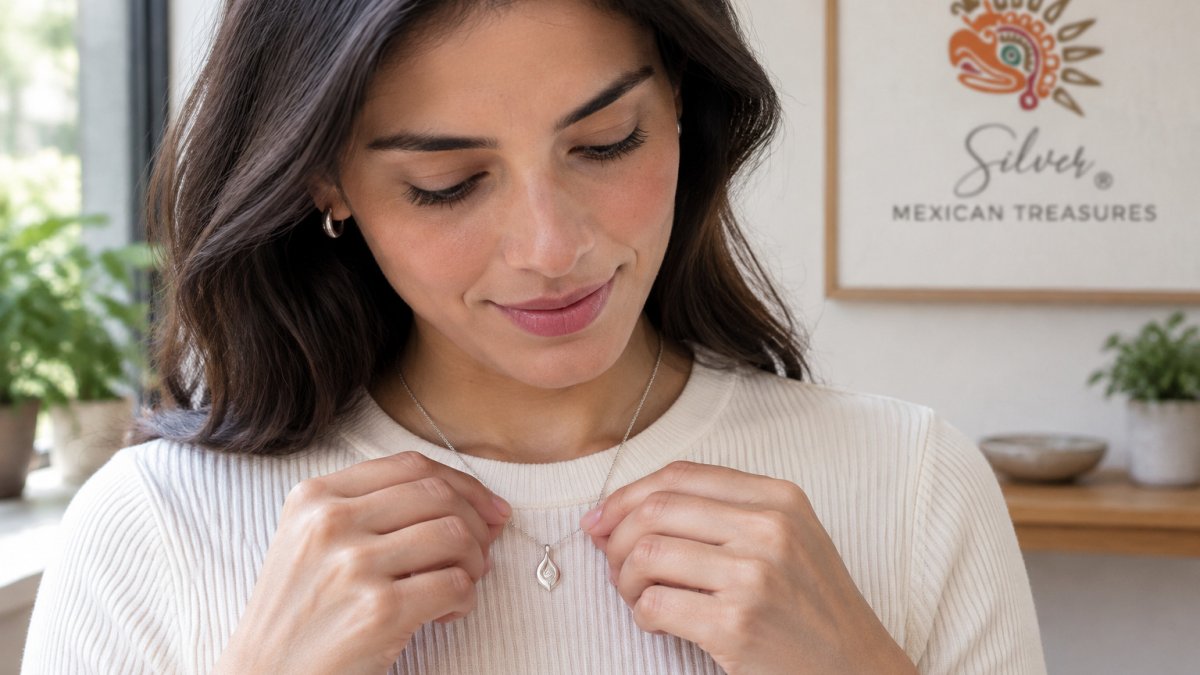
Our Naturaleza Cuadro Pendant pairs well with minimalist outfits. Its organic shape and 10.1 gram weight give it presence without overwhelming a simple neckline.
How to Tell If Silver Is 925 Before You Buy
Sterling silver is 92.5 percent pure silver, usually alloyed with copper for strength. Most genuine sterling pieces carry a "925" or "Sterling" stamp. That stamp is a useful first check, but it does not guarantee quality on its own, so look at a few more details.
Check the stamp, the weight and the finish. Genuine sterling feels substantial for its size, while plated or base-metal jewelry often feels light and hollow. A polished, even finish with crisp detailing points to careful workmanship.
Authentic pieces should also come with clear material information from the seller. At Silver Mexican Treasures, product listings state the material as certified .925 sterling silver along with dimensions and weight.
Handmade Silver vs Cast Jewelry: What to Look For
Handmade silver is shaped and finished by hand, which often leaves subtle variations in curve, thickness and surface texture. Our guide explains how to tell handmade silver from cast jewelry. Cast jewelry is poured into a mold, which produces identical pieces at higher volume.
Look for small irregularities in a handmade piece as a sign of individual work, not flaws. Cast pieces tend to have very uniform edges and identical surfaces, and they can show seam lines or porosity if the casting was rough. Handmade pieces often carry a softer, more personal finish.
Our Amores Heart Pendant shows this difference clearly. It is hand-formed by skilled Mexican artisans and finished to a high polish.
Choosing Your First Silver Pendant Necklace From Silver Mexican Treasures
For a first pendant, choose a design you will wear often, in a size that suits your neckline and daily routine. A good example to consider is this handmade sterling silver cross pendant.
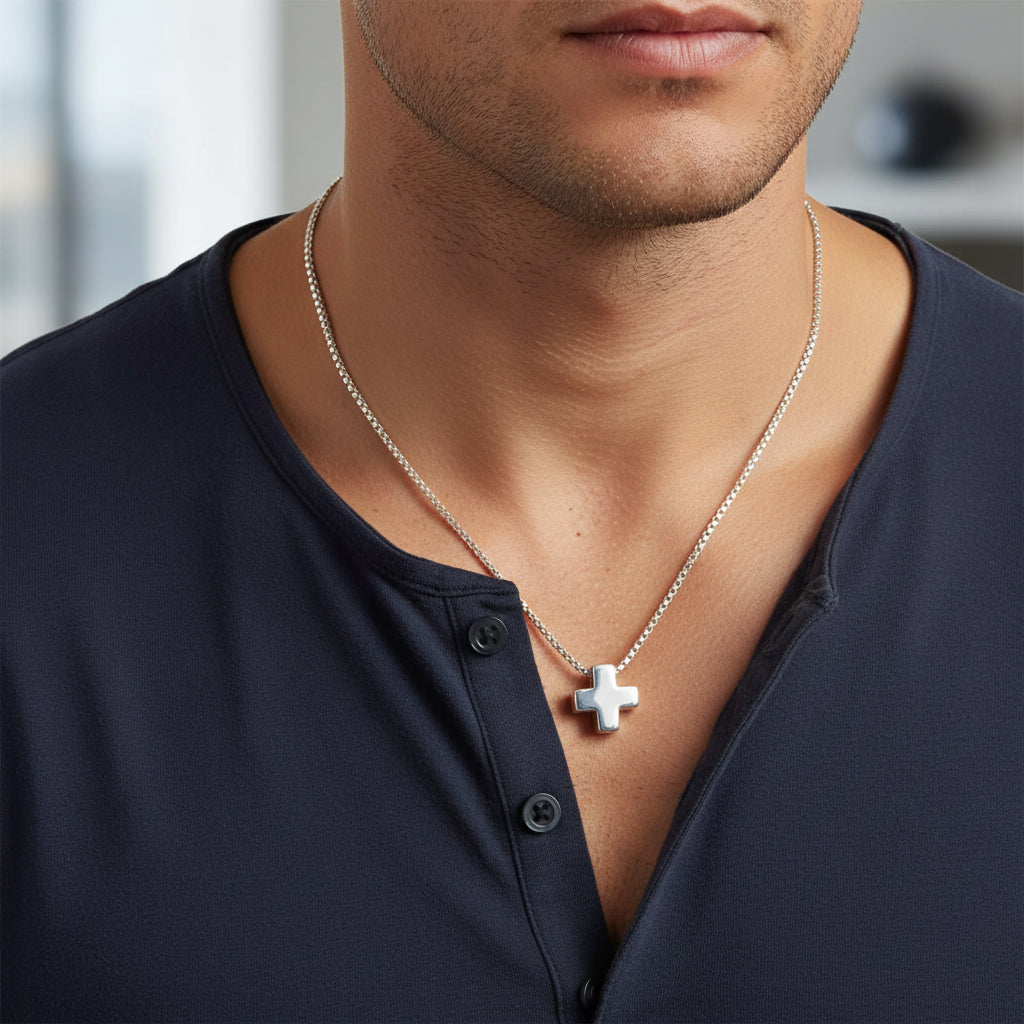
A medium pendant with a clean shape is a versatile place to start. If you want something symbolic, a cross or tree-of-life design adds meaning while staying easy to wear.
To help preserve its shine, avoid contact with water, perfume, lotion and harsh chemicals, store the piece in a dry place and polish gently with a soft silver cloth.
Ready to choose? Explore the full silver pendant collection and find the piece that fits your neckline, your chain and your style.
Frequently Asked Questions
How do I choose the right silver pendant necklace?
Start with the pendant itself. Check its diameter and weight, since a 2.4 cm round pendant like the Arbol de la Suerte Pendant ($75.00 CAD) sits differently from a smaller 1.5 cm cross. Then choose a chain that matches its weight, and check that the necklace suits your neckline. Lightweight pendants look best on fine chains, while heavier pieces need a sturdier link. Finally, confirm the metal is .925 sterling silver before you buy.
What chain length is best for a silver pendant?
Most people find 16 to 18 inches comfortable for a pendant worn at the collarbone, but the right length depends on the neckline and the pendant size. Shorter chains of 14 to 16 inches show small pendants clearly on high necklines. Longer chains of 18 to 20 inches suit crew or V-neck tops and let a larger pendant sit below the neckline. If you plan to layer, choose one chain at each length so the pendants do not crowd each other.
How can I tell if a silver pendant is real sterling silver?
Look for a .925 stamp on the pendant or its bail, which indicates 92.5 percent pure silver. Authentic pieces from reputable makers also come with clear information about their silver content and origin. Silver Mexican Treasures lists its pieces as certified .925 sterling silver, handcrafted in Mexico. Check that the description matches the stamp before you buy.
Is handmade silver better than cast silver jewelry?
Handmade silver is shaped and finished by hand, which often means more individual variation in form, texture and detailing. Cast jewelry is poured into a mould, which allows faster, more uniform production. Neither method guarantees quality on its own, so the silver content and finishing matter just as much. Handmade pieces, such as the La Cruz Pendant ($35.00 CAD), tend to suit buyers who value craftsmanship and one-of-a-kind character.
