
Why Choose Recycled Sterling Silver for Jewelry
Last Updated: November 1, 2026
Quick Summary
Recycled sterling silver is silver reclaimed from old flatware, broken jewelry and industrial scrap, then refined back to .925 purity. It is chemically the same alloy as newly mined sterling, with 92.5% silver, so buyers do not give up quality while choosing a lower-impact metal.
- Recycled sterling is refined to 92.5% silver, the same composition as newly mined sterling.
- Refining through electrolysis resets the metal to fine silver before it is re-alloyed.
- Recycling avoids the ore extraction and waste rock that mining silver requires.
- Purity is verified by a .925 hallmark, while 'recycled' is a provenance claim that needs documentation.
- Recycled silver still needs energy to refine, so its impact is lower, not zero.
Table of Contents
- What Is Recycled Sterling Silver?
- How the Silver Recycling Process Works
- The Environmental Benefits of Recycled Silver
- Sterling Silver vs Recycled Silver Quality: Is There a Difference?
- How to Identify High-Quality Sterling Silver
- Durability, Care and Hallmarking: What Matters Long Term
- Choosing Your Next Piece of Certified Silver
- Frequently Asked Questions
What Is Recycled Sterling Silver?
Recycled sterling silver is silver that has been reclaimed from existing sources, such as old flatware, broken jewelry, and industrial scrap, then refined back to .925 purity. Recycled silver is often chosen as part of a broader commitment to ethical, transparent jewelry that carries a smaller environmental footprint than metal pulled fresh from the ground.
The defining feature is that the metal already exists. Nothing new is dug out of a mine to make it. Once refined, recycled sterling is chemically the same alloy as newly mined sterling: 92.5% silver, with the remaining 7.5% usually copper. Buyers are not trading down on material when they choose it.
Many jewelers and refiners describe the process as a circular economy in practice, where precious metal keeps cycling through use rather than ending up in a landfill drawer.
How the Silver Recycling Process Works
Recycling sterling silver is generally a multi-stage industrial process, not a single melt-and-pour. Understanding the steps explains why recycled metal can meet the same .925 specification as newly mined sterling.
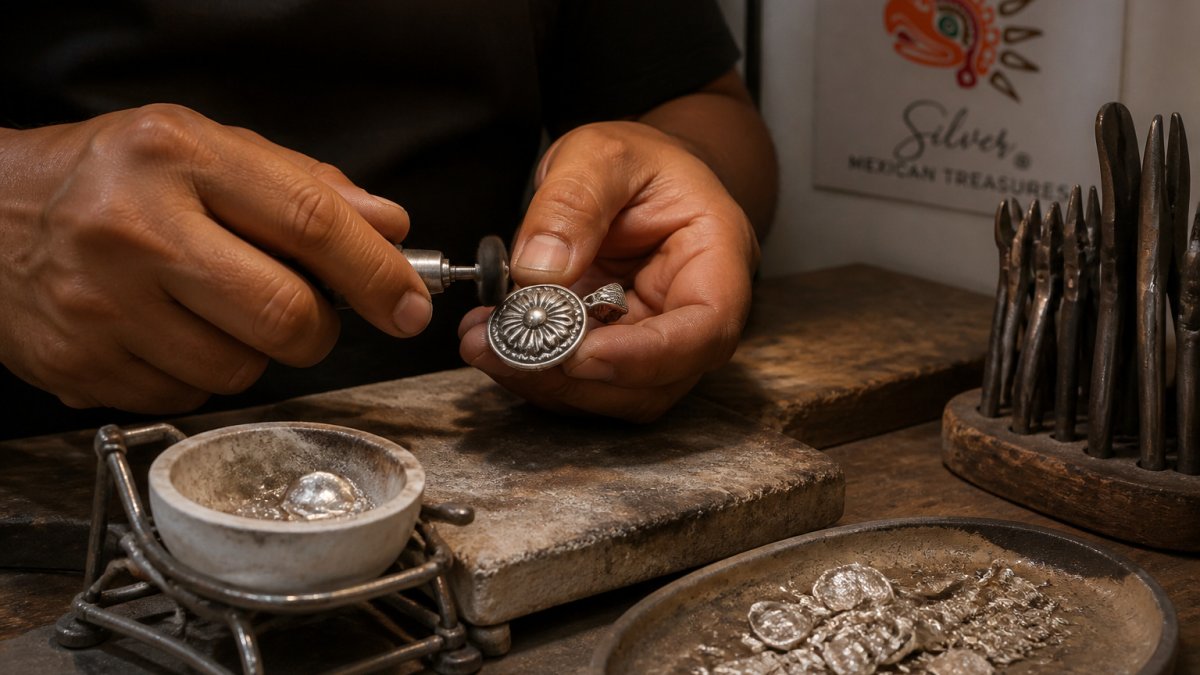
1. Collection and intake. Scrap silver arrives from several distinct streams: household items such as old flatware, broken chains, and single earrings; manufacturer offcuts and bench sweeps from jewelry workshops; industrial scrap from electronics; and, in smaller volumes, dental and photographic waste. Each stream carries different contaminants, so refiners log and segregate incoming material rather than dumping everything into one crucible.
Watch out: refining is only as good as the sorting that precedes it. Ask any seller how they verify incoming scrap and whether they assay the refined output, because unsorted material can introduce unwanted alloy content that no amount of electrolysis will fully correct.
The steps below show how scrap silver is turned back into .925 sterling.
| Stage | What happens | Key point |
|---|---|---|
| Collection and intake | Scrap arrives from households, workshops, and industry | Each stream carries different contaminants |
| Sorting | Refiners log and segregate incoming material | Unsorted scrap can add unwanted alloy content |
| Electrolytic refining | Impure metal is reset to fine silver | Contaminants are left behind |
| Re-alloying | Clean silver is alloyed back to .925 | Purity comes from the recipe, not the source |
The Environmental Benefits of Recycled Silver
Mining raw silver is resource-intensive. Extraction moves large volumes of ore and generates waste rock and tailings, all of which carry environmental costs. Recycling avoids most of that disturbance because the metal is already in circulation. For the wider ethical picture, see the benefits of buying fair trade jewelry.
Reusing silver can also reduce the carbon emissions linked to new extraction and smelting, since metal recovered from scrap does not need to be mined.
These benefits are real, but they are relative. Recycled silver still needs energy to refine and re-alloy, so the honest comparison is between a lower-impact process and a higher-impact one, not between zero impact and some impact.
Sterling Silver vs Recycled Silver Quality: Is There a Difference?
On the metal itself, there is no difference. Once recycled silver has been refined to fine silver and re-alloyed to .925, it is chemically indistinguishable from sterling made from newly mined silver: 92.5% silver and 7.5% copper (or another specified alloying metal). A jeweler's bench, a polishing cloth, and a tarnish test cannot tell them apart. The distinction is origin, not composition.
Why the purity holds regardless of source. The reason is the refining step described above. Electrolytic refining dissolves the impure anode and re-deposits silver at high purity, effectively resetting the metal's chemistry. Whatever contaminants came in with the scrap, solder, plating, base-metal findings, are left behind in the electrolyte or the anode slime. The refiner then builds the sterling alloy from that clean feedstock. In other words, the .925 specification is a function of the alloying recipe, not of where the silver came from.
Where the real difference lives: verification. The honest caveat is that 'recycled' is a claim about provenance, and provenance is harder to verify than purity. A piece can be genuinely .925 and still have an unverifiable recycling story. Buyers who care about the environmental angle should therefore ask two separate questions: Is the metal .925? and Can the seller document where the metal came from?
- Purity verification: Look for a .925 hallmark and, for higher-value pieces, an assay or certificate from the refiner or an independent lab.
- Recycled-claim verification: Ask whether the refiner sources from post-consumer scrap, what proportion of the feedstock is recycled, and whether the supply chain is documented. Chain-of-custody documentation is the closest thing the industry has to a guarantee.
- Workmanship: Purity is necessary but not sufficient. A well-made .925 piece has clean solder joints, a consistent finish, and a weight that matches its dimensions. Poor workmanship can ruin a piece made from perfectly good recycled metal.
The 'recycled means lower grade' myth. This is a common misconception. Recycled silver refined to .925 is the same alloy made from a different feedstock, so quality depends on the refiner's rigor rather than the metal's origin.
A common mistake is treating 'recycled' as a synonym for 'lower grade.' It is not. Quality depends on who refines the metal, how carefully it is assayed, and how well the piece is made, the same factors that determine the quality of any sterling silver.
Naturaleza Corazón Set (Earrings & Pendant) - Organic Heart Design in .925 →
How to Identify High-Quality Sterling Silver
Look for a .925 hallmark stamped on the piece. This indicates the metal is 92.5% silver. Be cautious of pieces marked only "silver plated" or with no marking at all, since those have no defined silver content.
Ask whether purity was verified by an independent lab and request the documentation. To go further, see how to confirm lab certified silver with seven practical methods. A reputable seller will provide it without hesitation.
Check the finish and weight. Genuine sterling feels substantial for its size and develops a consistent patina rather than flaking or showing a copper-colored base metal beneath the surface.
Durability, Care and Hallmarking: What Matters Long Term
Sterling silver tarnishes naturally when exposed to air, moisture, and sulfur compounds. Tarnish is a surface reaction, not a sign of poor quality. Storing pieces in a dry place, away from perfumes and chemicals, slows it considerably. For a full routine, read how to care for sterling silver.
Gently polishing with a soft silver cloth restores shine without damaging the metal. Avoid abrasive cleaners, which can wear away the finish over time.
Hallmarking is the most reliable long-term signal of authenticity. A clear mark tells you the piece has been assessed against a recognized purity standard, which protects you whether you buy today or resell years from now.
Choosing Your Next Piece of Certified Silver
If you want a starting point, the Naturaleza Corazón Set (Earrings & Pendant) pairs matching .925 sterling pieces in a soft organic heart design. It is a practical choice for gifts or for anyone who likes coordinated, everyday silver.

For lighter wear, the Sterling Silver Drop Earrings offer a minimal, lightweight shape that works from morning to evening. At 1.3 grams, they are lightweight for everyday wear.

Before you buy, confirm the hallmark, ask for purity documentation, and check the care guidance. Good jewelry should be easy to maintain and clear about what it is made from.
Frequently Asked Questions
Is recycled sterling silver the same as regular sterling silver?
Yes, once refined to specification, recycled sterling is chemically the same alloy as newly mined sterling, with 92.5% silver content. The difference lies in its origin, not its composition.
Does recycled silver tarnish faster?
No. Tarnish depends on care and storage, not on whether the metal was recycled. Keeping pieces dry and polishing them gently slows tarnish for any sterling silver.
How can I confirm my silver is authentic?
Look for a .925 hallmark, request independent purity documentation, and buy from a seller who can explain how their metal is verified and refined.
Frequently Asked Questions
Is recycled sterling silver a good quality?
Yes. Recycled sterling silver is refined to the same standard as newly mined silver, so a piece stamped .925 contains 92.5 percent pure silver regardless of where the metal came from. Quality depends on the refining and alloying process and on the maker's workmanship, not on whether the silver was recovered from old jewelry, flatware or industrial scrap. When buying, look for a .925 stamp and, where available, lab certification or a clear statement from the maker about how the metal was sourced and refined.
Is recycled sterling silver the same quality as newly mined silver?
In purity, yes. Once refined, recycled silver meets the same .925 composition as newly mined silver, and the metal itself does not degrade through recycling. The practical differences come from the artisan's alloy choices, finishing and craftsmanship. A well-made recycled piece and a well-made mined piece will perform the same, so the maker's standards matter more than the metal's origin.
Does recycled sterling silver tarnish faster than traditional silver?
No. Tarnish comes from sulfur in the air, moisture, perfumes, and contact with chemicals, not from the silver's origin. Recycled and mined sterling silver tarnish at the same rate under the same conditions. To slow tarnishing, store your pieces dry in a sealed bag or box, remove jewelry before swimming or applying lotion, and polish gently with a soft silver cloth as needed.
How can I verify that my jewelry is made from recycled sterling silver?
Ask the maker directly where the silver came from and how it was refined. Reputable makers can explain their sourcing and provide documentation or lab certification for their metal. Check that the piece carries a .925 purity mark, and look for a maker's mark. A transparent seller will answer these questions in detail, and a vague answer is worth noticing before you buy.
