
Best Authentic Mexican Silver Brands
Table of Contents
- What Makes Authentic Mexican Silver Different
- How to Date Taxco Silver Jewelry Pieces
- Identifying Authentic Taxco Silver Hallmarks
- Sterling Silver vs. Fine Silver: What You Need to Know
- Quick Comparison: Our Handcrafted Collection
- Traditional Silversmithing Techniques and Craftsmanship
- Why Fair Trade and Direct Sourcing Matter
- Frequently Asked Questions
Last Updated: October 2, 2026
What Makes Authentic Mexican Silver Different
Authentic Mexican silver stands apart from mass-produced alternatives in durability, design, and cultural value. True authentic mexican silver jewelry from artisans like those at Silver Mexican Treasures carries lab-certified .925 sterling silver, a standard that guarantees composition and longevity backed by testing.
Handcrafted work carries the maker's signature: variations in weight, finish, and design that reflect artisan skill. Handmade pieces develop character over time, the patina on oxidized silver and the way light catches a hand-polished surface tell a story that mass-produced standardized pieces cannot.
Silver Mexican Treasures partners directly with Consejo Regulador de la Plata member artisans, cutting out intermediaries and ensuring fair wages reach the makers. This transparency is rare in jewelry retail.
Lab-certified .925 sterling silver remains bright and wearable for years. This durability justifies the investment.
How to Date Taxco Silver Jewelry Pieces
Taxco silver jewelry from different decades carries distinct markers that reveal age and authenticity.
Examine hallmarks and maker's marks. Pieces from the 1940s-1960s typically carry clear stamps indicating purity and maker identity: "925," "TAXCO," and artisan initials or name. Hand-stamped marks from older pieces show slight irregularities, while modern stamping is more uniform.
Older pieces show visible solder lines under magnification, while modern techniques create nearly invisible joins.
Art Deco influences dominated Taxco work from the 1940s through 1960s with geometric patterns and bold symmetry. The 1970s-1980s brought organic, nature-inspired designs. Contemporary pieces blend both influences or embrace minimalism.
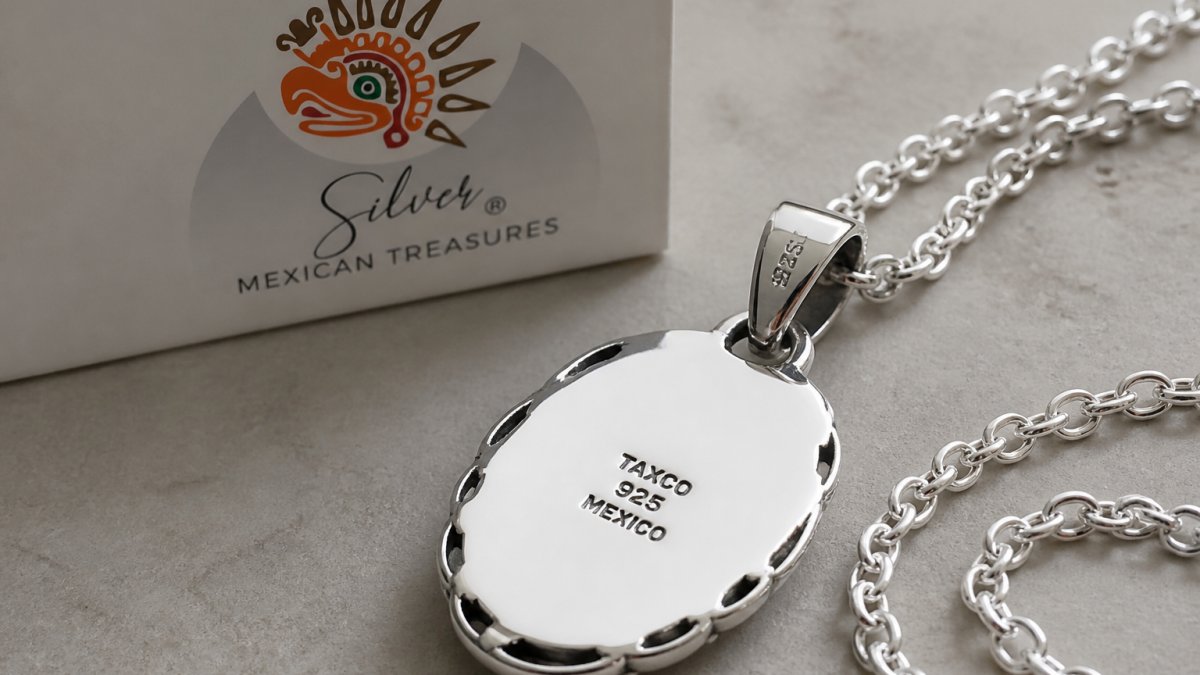
Silver Mexican Treasures maintains records of artisan partnerships to verify when pieces entered the collection.
Identifying Authentic Taxco Silver Hallmarks
Hallmarks are the fingerprints of silver jewelry. They prove origin, purity, and maker identity. Understanding what to look for separates authentic Taxco pieces from counterfeits.
The "925" stamp indicates .925 sterling silver, the international standard for fine silver jewelry. Authentic Taxco pieces carry this clearly and sharply. Counterfeits often omit it or use vague markings without a purity number.
The "TAXCO" mark varies by era. Pieces from the 1950s-1970s often show "TAXCO MEXICO" in block letters. Artisan initials or workshop names frequently appear alongside the location mark, identifying the specific silversmith and adding authenticity.
Many Taxco silversmiths registered their marks with local guilds. A piece bearing a registered mark can be traced to its maker. Direct sourcing from artisans like those at Silver Mexican Treasures means you know exactly who created the piece.
Authentic pieces stamp hallmarks on the back or inside, where they won't interfere with design but remain visible. On chains, look for hallmarks on the clasp or tag. On pendants, the bail or back should carry marks.
Consejo Regulador de la Plata certification is the gold standard for authentic Taxco work. Silver Mexican Treasures sources from Consejo members, ensuring verified authenticity.
Sterling Silver vs. Fine Silver: What You Need to Know
The difference between sterling and fine silver affects durability, value, and how jewelry ages. Understanding this distinction helps you make informed choices.
Sterling silver is .925 pure silver mixed with .075 other metals, typically copper. This alloy makes silver strong enough for daily wear jewelry while resisting tarnishing better than lower-purity alloys. It's the industry standard because it balances purity with practicality.
Fine silver is .999 pure, softer and more prone to tarnishing than sterling. It's rarely used for wearable jewelry, appearing instead in investment bullion and art pieces where durability isn't the priority.
For wearable jewelry, sterling silver is the correct choice. Taxco artisans have used .925 sterling for generations because it allows intricate designs that pure silver cannot achieve. When you buy authentic Taxco pieces from Silver Mexican Treasures, you're getting the proven standard for lasting jewelry.
Linked Chain - Handmade 45 cm .925 Sterling Silver Chain in Mexican Silver →
| Metric | Sterling Silver (.925) | Fine Silver (.999) |
|---|---|---|
| Purity | 92.5% silver, 7.5% alloy | 99.9% silver, 0.1% alloy |
| Durability | Excellent for daily wear | Soft, prone to damage |
| Tarnish Resistance | Very good | Moderate |
| Best Use | Wearable jewelry | Investment, art pieces |
| Price | Moderate | Higher per gram |
| Longevity | 20+ years with care | Variable, requires careful handling |
Copper is the traditional choice in sterling silver, contributing to strength and color warmth.
Lab certification removes guesswork. Pieces from Silver Mexican Treasures come lab-tested for purity, providing documented verification of what you're purchasing.
Quick Comparison: Our Handcrafted Collection
Silver Mexican Treasures offers authentic mexican silver pieces, each handcrafted by Taxco artisans:
| Piece | Material | Length/Size | Price | Best For |
|---|---|---|---|---|
| Sleek Snake Chain | .925 sterling silver | 45 cm or 55 cm | $55.00 | Everyday wear, layering, understated elegance |
| Linked Chain | .925 sterling silver | 45 cm | $60.00 | Lightweight daily wear, minimalist styling |
| Colores Necklace | Rubber/leather with .925 clasp | 45 cm | $18.00 | Modern casual look, pendant base |
| Dragon Pendant | .925 sterling silver | 1.3 x 1.7 cm | $25.00 | Bold statement, symbolic meaning |
| El Niño Charm | .925 sterling silver | 1.9 x 1 cm | $25.00 | Sentimental gifting, meaningful jewelry |
| Futbol Pendant | .925 sterling silver | 2.1 x 1 cm | $35.00 | Sports enthusiasts, personal expression |
| Arbol de la Suerte Pendant | .925 sterling silver | 2.4 cm diameter | $75.00 | Symbolic meaning, special occasions |
| Fuerza Chain | .925 sterling silver | 52 cm | $75.00 | Longer wear, pendant base, layering |
| Rope Chain | .925 sterling silver | 46 cm | $75.00 | Textured classic look, everyday versatility |
| Torzal Cuff Links | .925 sterling silver | 1 cm | $95.00 | Formal wear, professional styling |
Every piece is lab-certified .925 sterling silver and handcrafted by Consejo Regulador de la Plata member artisans. The Sleek Snake Chain suits everyday wear, while the El Niño Charm and Arbol de la Suerte Pendant make meaningful gifts.

Entry pieces like the Colores Necklace and Dragon Pendant offer handcrafted Taxco work at accessible prices. Chains serve as versatile bases for layering. Formal pieces like the Torzal Cuff Links bring artisan character to professional settings.
Traditional Silversmithing Techniques and Craftsmanship
Taxco silversmithing carries centuries of technique. The methods used by contemporary artisans trace back to pre-Columbian metalwork and Spanish colonial traditions. Understanding these techniques reveals why handcrafted pieces command their value.
Hand-forming begins with raw silver. Artisans heat the metal to specific temperatures, then shape it using hammers, anvils, and specialized tools. This process, called forging, creates the foundation for every piece.
Soldering joins separate pieces with precision. Artisans apply flux and solder (a lower-melting-point silver alloy) to connect components. Hand-soldering requires skill: too much heat damages the piece, too little leaves weak joints. Experienced silversmiths create nearly invisible seams that strengthen rather than compromise the design.
Oxidizing creates visual depth. Many Taxco pieces feature oxidized silver, darkened areas that contrast with polished highlights. Artisans apply oxidizing chemicals selectively, then hand-polish the surface to reveal the base metal beneath. This technique, called patination, adds complexity and visual interest that flat, uniformly polished pieces cannot achieve.
Stamping and detailing add character. Artisans use hand stamps to create patterns, hallmarks, and decorative elements. Each strike is slightly different, creating organic variation. This is why no two handcrafted pieces are identical. The variation isn't a flaw; it's evidence of human skill and intentional design choices.
The folk art tradition influences contemporary work. Pre-Columbian metalwork emphasized symbolic forms and cultural imagery. Spanish colonial techniques introduced filigree and inlay work. Modern Taxco artisans blend these influences, creating pieces that honor heritage while reflecting contemporary aesthetics. The Arbol de la Suerte Pendant and Dragon Pendant exemplify this synthesis; they carry symbolic meaning rooted in tradition while maintaining modern design sensibility.
Why Fair Trade and Direct Sourcing Matter
Fair trade isn't marketing language in the context of Taxco silver; it's a structural commitment that affects who benefits from your purchase.
Direct sourcing from artisans eliminates middlemen. When you buy from Silver Mexican Treasures, your money goes to the maker, not through layers of distributors who each take a cut. This means artisans receive fair compensation for their skill and labor. The practice supports the livelihoods of women silversmiths in Taxco, many of whom are sole providers for their families.
Consejo Regulador de la Plata membership adds accountability. This regulatory body sets standards for labor practices, material purity, and production ethics. Artisans who belong must meet these standards. When you purchase from Consejo members, you're supporting a system designed to protect both workers and consumers.
Transparency builds trust.
Frequently Asked Questions
How can you tell if Mexican silver is authentic?
Authentic Mexican silver carries a .925 hallmark, indicating 92.5% pure silver content. Look for maker's marks and the word 'Taxco' on the piece. Lab-certified jewelry comes with documentation proving purity. Authentic pieces feel substantial in weight, show consistent craftsmanship, and develop a natural patina over time.
What does the .925 stamp mean on Mexican silver?
The .925 stamp certifies that the piece contains 92.5% pure silver, with 7.5% alloy metal for durability. This is the international standard for sterling silver and ensures high quality and lasting value. Mexican silver stamped .925 meets the same purity standards as sterling silver worldwide, making it a reliable indicator of authenticity.
How do I date vintage Taxco silver jewelry?
Dating Taxco pieces involves examining hallmarks, maker's marks, and design language.
Why should I choose ethically sourced Mexican silver over mass-produced alternatives?
Ethically sourced pieces directly support artisan communities and preserve traditional silversmithing heritage. Fair-trade practices ensure artisans receive fair compensation and work in safe conditions. Handcrafted silver from direct artisan partnerships guarantees one-of-a-kind quality and lasting durability. You're investing in authentic cultural heritage while supporting livelihoods in Taxco's artisan community.