
Ethically Sourced Sterling Silver Necklaces
Table of Contents
- What Ethically Sourced Sterling Silver Necklaces Really Mean
- How to Verify Ethical Jewelry Claims and Certifications
- Handmade Artisan Silver Necklaces: Craftsmanship and Fair Trade Impact
- Comparison Table: Our Ethically Sourced Necklace Collection
- Recycled Sterling Silver Necklaces vs. Newly Mined Silver
- Fair Trade Silver Jewelry: Supporting Artisans and Communities
- Care, Durability, and Long-Term Value of Ethically Sourced Pieces
- Frequently Asked Questions
Last Updated: October 11, 2026
What Ethically Sourced Sterling Silver Necklaces Really Mean
When you buy an ethically sourced sterling silver necklace, you're making a choice about more than just metal purity. You're deciding whether your jewelry supports fair wages, transparent supply chains, and artisan communities that depend on the craft. At Silver Mexican Treasures, we've built our entire collection around this principle: every piece of ethically sourced sterling silver necklaces we sell comes directly from artisans in Taxco, Mexico, with fair trade practices embedded from the workshop to your wrist.
The term "ethically sourced" means different things depending on who's using it. Some brands use it loosely to mean "we recycle some silver." Others claim it because they work with artisans, but provide no proof of fair compensation. True ethical sourcing requires verifiable practices: documented artisan partnerships, transparent pricing, and certified .925 sterling silver that meets international purity standards. Many consumers assume all handmade jewelry is ethical by default. It isn't.
The difference comes down to supply chain visibility. When you purchase ethically sourced sterling silver necklaces from a brand that sources directly from artisans rather than through middlemen, the margin that would normally go to distributors goes directly to the makers. Our team at Silver Mexican Treasures works with members of Consejo Regulador de la Plata, the regulatory body that certifies authentic Taxco silver artisans, ensuring every piece is both genuinely handcrafted and genuinely fair trade.
How to Verify Ethical Jewelry Claims and Certifications
Claims about ethical sourcing are easy to make and hard to verify. Many brands say "fair trade" without any certification backing it up. The most reliable way to verify ethical jewelry claims is to look for third-party certification and direct artisan attribution. When a brand names the artisans or artisan community behind each piece, that's a signal they're comfortable with transparency. Anonymous "artisan workshops" or vague references to "ethical practices" should raise questions.
Lab certification for sterling silver purity is straightforward to check. Genuine .925 sterling silver has been tested and documented. Brands that offer lab-certified pieces, as we do at Silver Mexican Treasures with certification from The Silver Laboratory, can provide test documentation. Ask for it. If a brand can't produce lab results, the purity claim isn't verified.
Fair Trade certification varies by organization. Some jewelry carries Fairtrade International certification, though this is less common in artisan silver than in coffee or cocoa. More common in the artisan jewelry space is direct-partnership transparency: the brand publishes information about who makes the pieces, where they work, and how much they're paid. This open-book approach is often more trustworthy than a generic certification label, because it's harder to fake and easier for customers to investigate.
Ask brands these specific questions before buying:
- Can you name the artisan or workshop that made this piece?
- Do you have lab certification for the .925 purity?
- What percentage of the retail price goes directly to the artisan?
- Are the artisans you work with members of any trade organizations or regulatory bodies?
Brands that answer these questions directly and with documentation are the ones taking ethics seriously.
Handmade Artisan Silver Necklaces: Craftsmanship and Fair Trade Impact
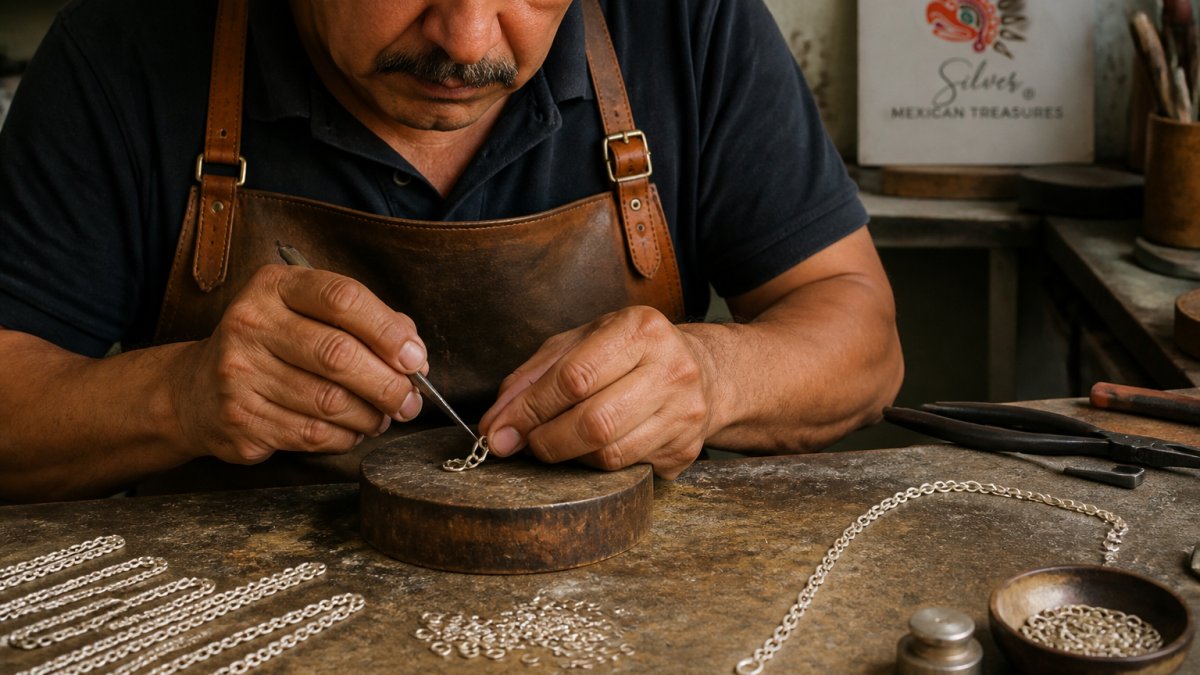
Handmade artisan silver necklaces represent a fundamentally different production model from mass-manufactured jewelry. Each link is shaped, polished, and finished by hand. This isn't nostalgia or marketing, it's a technical reality that changes the final product. Machine-made chains achieve uniform perfection. Handcrafted chains carry subtle variations in texture, weight distribution, and finish that give each piece character.
The Fair Trade impact of choosing handmade artisan silver necklaces is direct and measurable. When you buy from Silver Mexican Treasures, your purchase supports women artisans in Taxco who have preserved silversmithing techniques passed down through generations. These aren't factory workers on a wage scale, they're independent craftspeople whose income depends on the pieces they sell.
Taxco, Mexico, has been the silversmithing capital of the Americas for centuries. The craft is embedded in the region's identity and economy. But artisan silver work is under pressure from cheaper mass production overseas.
Our collection features pieces made by artisans who are members of Consejo Regulador de la Plata, which means they meet strict standards for silver purity, craftsmanship, and ethical business practices. This membership is not given lightly, it's a credential that verifies both the quality and the legitimacy of the artisan's work.
Comparison Table: Our Ethically Sourced Necklace Collection
| Necklace Style | Starting Price | Best For | Fair Trade Impact |
|---|---|---|---|
| Delgada Sleek Snake Chain | $45.00 | Everyday wear, layering, first sterling silver piece | Direct support to Taxco artisans |
| Sleek Snake Chain | $55.00 | Daily wear, delicate styling, collectors | Direct support to Taxco artisans |
| Delgada Rope Chain | $55.00 | Minimalist look, lightweight wear, layering | Direct support to Taxco artisans |
| Linked Chain | $60.00 | Clean minimalist style, versatile pairing | Direct support to Taxco artisans |
| Largo Necklace | $60.00 | Long elegant silhouette, statement wear | Direct support to Taxco artisans |
| Rope Chain (Thicker) | $75.00 | Classic textured look, stronger presence | Direct support to Taxco artisans |
| Fuerza Chain | $75.00 | Layering base, pendant foundation, versatile length | Direct support to Taxco artisans |
| Suave Chain | $65.00 | Polished everyday wear, linked texture | Direct support to Taxco artisans |
| Colores Rubber/Leather Necklace | $18.00 | Modern casual, pendant base, budget-friendly | Direct support to Taxco artisans |
Every piece in our collection is lab-certified .925 sterling silver and handcrafted by Mexican artisans. The price difference reflects weight, complexity of the technique, and material costs, not middleman markups. All proceeds beyond material costs go directly to the artisans who made the piece.

Recycled Sterling Silver Necklaces vs. Newly Mined Silver
The environmental case for recycled silver is straightforward: mining new silver requires energy-intensive extraction, water use, and land disruption. Recycled sterling silver necklaces eliminate the mining step entirely. The silver already exists; it's melted down, refined, and reformed into new jewelry. This reduces environmental impact significantly compared to newly mined silver.
However, the ethical picture is more nuanced. Recycled silver doesn't automatically mean ethical. A recycled necklace made in a factory with poor labor practices isn't more ethical than a newly mined necklace made by fairly compensated artisans. The two questions, environmental impact and labor ethics, are separate, and both matter.
For handcrafted pieces, the distinction matters less than you might think. This is why many ethical artisan brands, including ours, prioritize fair trade labor practices and certified purity over recycled content.
The real environmental win comes from durability. A necklace that lasts decades has a lower lifetime environmental impact than one that breaks or tarnishes after a year. Our ethically sourced sterling silver necklaces are designed and made to last. Proper care keeps them shining for years.
Linked Chain - Handmade 45 cm .925 Sterling Silver Chain in Mexican Silver →
Fair Trade Silver Jewelry: Supporting Artisans and Communities
Fair Trade silver jewelry operates on a simple principle: the people who make the pieces earn a living wage, have safe working conditions, and retain control over their craft and business decisions. This is different from charity or donation, it's commerce structured to be equitable.
When you buy fair trade silver jewelry, the artisan receives a price that covers materials, labor, overhead, and profit. This sounds basic, but it's not standard in the jewelry industry. Many artisans working through traditional supply chains receive only a fraction of the retail price, with most margin captured by distributors and retailers.
Direct partnerships eliminate middlemen. At Silver Mexican Treasures, we work directly with artisans who are members of Consejo Regulador de la Plata. This means no distributors, no wholesalers taking cuts, and no mystery about where the money goes.
Fair Trade impact extends beyond individual artisans to communities. When artisans earn stable income from their craft, they invest in their families, their workshops, and their communities. The craft tradition strengthens instead of disappearing. This is the multiplier effect of fair trade: one necklace purchase supports not just one person, but the economic ecosystem around them.
Many of our customers mention in their feedback how much they value knowing their purchase supports women artisans and preserves traditional craftsmanship. This transparency builds trust and gives the jewelry meaning beyond its aesthetic or material value.
Care, Durability, and Long-Term Value of Ethically Sourced Pieces
Ethically sourced sterling silver necklaces are made to last, but they require proper care. The .925 purity means the silver will tarnish over time when exposed to air and moisture. This isn't a flaw, it's the nature of sterling silver.
Store your necklace in a dry place, away from perfume, lotion, and harsh chemicals. These substances accelerate tarnishing and can damage the finish. When you're not wearing it, keep it in a clean, dry container.
Water exposure speeds tarnishing, so remove your necklace before swimming, showering, or applying skincare products. This isn't because the silver will break, it won't, but because water and chemicals accelerate oxidation. A few seconds of prevention saves hours of polishing later.
The durability of handcrafted .925 sterling silver is exceptional. Unlike plated jewelry, which wears through and exposes base metal underneath, solid sterling silver gets better with age. Polishing removes tarnish without removing metal. A well-maintained necklace can be worn daily for decades without losing integrity or shine.
If your necklace does break, a clasp fails, a link snaps, it can be repaired by any jeweler. The piece retains value because it's made from genuine material. Solid silver jewelry gets fixed and worn again.
The long-term value of choosing ethically sourced sterling silver necklaces compounds over time. You own a piece that lasts and that supports artisans and traditional craft. That's worth the premium over mass-produced alternatives.
When you choose ethically sourced sterling silver necklaces, you're not just buying jewelry, you're making a decision about what kind of commerce you want to support. Every necklace is lab-certified .925 sterling silver, handcrafted by Mexican artisans in Taxco, and backed by transparent fair trade practices. Explore the Collection! You'll find pieces ranging from delicate everyday chains like the Delgada Sleek Snake Chain at $45.00 to versatile statement pieces like the Fuerza Chain at $75.00.

Frequently Asked Questions
What does ethically sourced sterling silver mean?
Ethically sourced sterling silver means the metal was obtained through responsible practices that prioritize fair wages, safe working conditions, and transparent supply chains. It involves direct partnerships with artisans (often verified by organizations like the Consejo Regulador de la Plata), ensures workers are paid fairly for their labor, and minimizes environmental harm. Lab-certified .925 sterling silver confirms purity, while fair trade certifications verify that artisans receive equitable compensation and that production supports their communities.
How can I verify that a sterling silver necklace is ethically made?
Look for specific certifications and transparency markers: lab certification (like The Silver Laboratory testing), membership in regulatory bodies (such as the Consejo Regulador de la Plata), clear information about artisan origin and partnerships, and direct sourcing claims with named artisans or workshops. Legitimate brands disclose their supply chain openly, explain how artisans are compensated, and provide documentation. Avoid vague claims like 'ethically made' without supporting details. Request certificates of authenticity and ask sellers directly about their sourcing practices.
Is recycled sterling silver more sustainable than newly mined silver?
Recycled sterling silver typically has a lower environmental impact than newly mined silver because it avoids the energy-intensive extraction and refining processes that mining requires. Recycling reduces carbon emissions, eliminates mining-related habitat disruption, and decreases water and chemical pollution. However, sustainability depends on the entire production chain: mass-produced recycled jewelry may still involve energy-intensive manufacturing. Both recycled and newly mined sterling can be ethically sourced if artisans are fairly compensated and labor standards are met.
What makes fair trade silver jewelry different from regular silver jewelry?
Fair trade silver jewelry guarantees that artisans receive fair compensation for their work, work in safe conditions, and have direct relationships with buyers rather than through exploitative middlemen. Fair trade practices support small-batch, handmade production that preserves traditional craftsmanship and supports artisan communities economically. Regular silver jewelry often comes from mass-produced sources where labor practices and artisan compensation are unclear. Fair trade pieces typically cost more because the price reflects the true value of skilled labor and ethical practices, whereas cheaper jewelry often reflects underpaid labor or unclear sourcing.