
How to Care for Sterling Silver: A Complete Guide
Table of Contents
- Why Proper Care Matters for Sterling Silver
- How to Clean Tarnished Sterling Silver
- Using a Sterling Silver Cleaning Cloth
- How to Store Sterling Silver Jewelry
- How Often to Clean Sterling Silver
- What to Avoid When Caring for Sterling Silver
- When to Seek Professional Cleaning or Repair
- Frequently Asked Questions
Last Updated: October 17, 2026
Why Proper Care Matters for Sterling Silver
Sterling silver needs thoughtful maintenance to keep its shine and durability, and learning how to care for sterling silver ensures your pieces remain beautiful for years.
Tarnish is the main enemy of sterling silver, forming when the metal reacts with sulfur compounds in the air, humidity, or daily products.
Your sterling silver pieces are investments, the steps you take today determine whether they stay radiant for years or dull beyond easy restoration.
How to Clean Tarnished Sterling Silver
When tarnish appears, the right method depends on how much has built up and what type of piece you're cleaning.
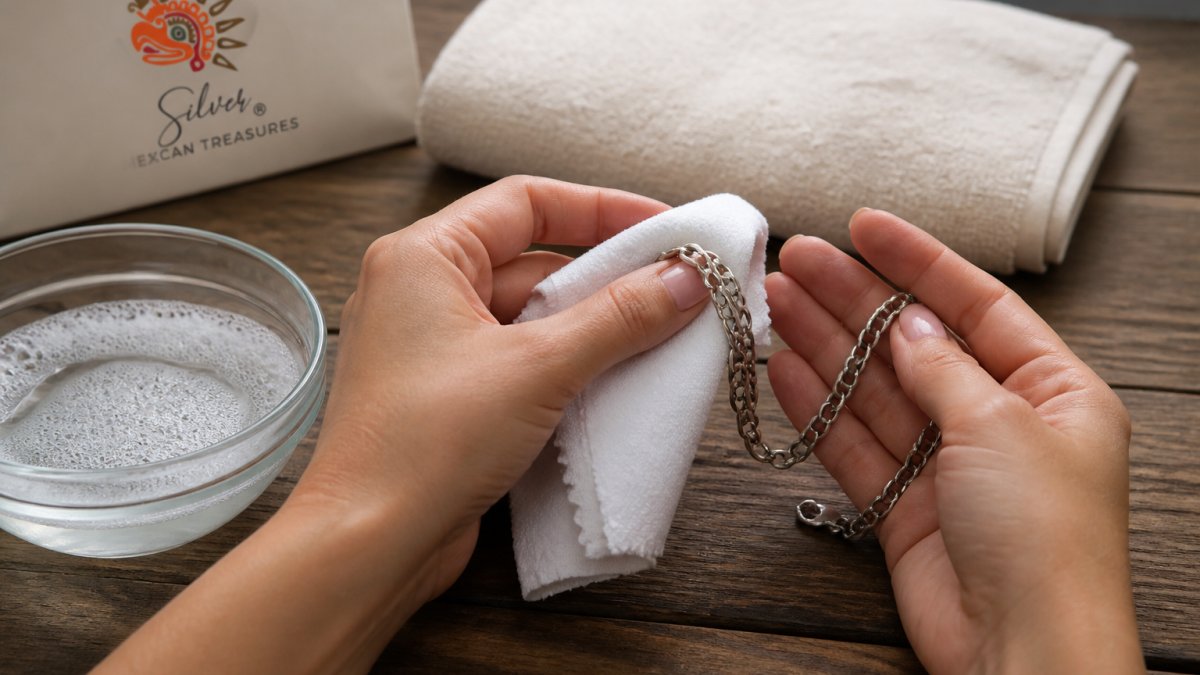
The Mild Soap and Warm Water Method
This gentlest method works well for lightly tarnished pieces.
After soaking, gently scrub with a soft toothbrush or cloth, reaching into crevices. Rinse thoroughly, then dry completely with a soft, lint-free cloth, leftover moisture causes new tarnish.
This method works best for everyday pieces like chains and simple rings. It's safe for all sterling silver jewelry types, including delicate handcrafted pieces like the Linked Chain or Rope Chain from our collection.


Using a Polishing Cloth for Daily Shine
A polishing cloth designed for silver is one of the easiest tools for maintaining shine between deeper cleanings.
Keep a polishing cloth handy for quick touch-ups after wearing jewelry. It's perfect for frequently worn pieces like the Flattened Wire Ring.

The cloth method is safe for all sterling silver, including pieces with delicate details or gemstones, and it's the fastest way to restore shine in a hurry.
Baking Soda Paste for Stubborn Tarnish
For heavier tarnish that soap and water won't remove, mix baking soda with a little water into a thick, spreadable paste.
Apply to tarnished areas with a soft cloth or toothbrush and rub gently in circular motions; the mild abrasive lifts stubborn tarnish.
This works well for significant tarnish buildup, but avoid it on very delicate or textured jewelry where paste can get trapped in crevices.
Using a Sterling Silver Cleaning Cloth
A dedicated sterling silver cleaning cloth is one of the best investments for jewelry maintenance.
Hold the piece firmly and rub the cloth gently in circular motions, focusing on visible tarnish and working in one direction.
Store your polishing cloth in a dry place, many come in protective pouches, and keep one in your drawer or bag for quick touch-ups.
How to Store Sterling Silver Jewelry
Storage matters as much as cleaning, poor conditions can undo your cleaning efforts within weeks.
Airtight Containers and Zip-Lock Bags
The best method is airtight containers or zip-lock bags. An airtight seal blocks the airborne sulfur that causes tarnish, dramatically slowing it.
Use jewelry-specific zip-lock bags or containers free of harsh chemicals or rough textures, and give each piece enough space so it isn't pressing against other jewelry.
Label your bags if you're storing multiple pieces. This makes it easy to find what you need without opening every container.
Using Silica Gel and Moisture Absorbers
Humidity accelerates tarnishing. Place one or two silica gel packets in each storage bag or container to absorb moisture and slow tarnish.
Replace silica gel packets every few months or when saturated, many change color when full, or reactivate them by heating in a low oven.
Charcoal is another effective moisture absorber, a small piece of activated charcoal in your storage container works similarly to silica gel.
Linked Chain - Handmade 45 cm .925 Sterling Silver Chain in Mexican Silver →
Protective Packaging and Separate Storage
Store each piece separately to prevent rubbing, scratches, and tarnish transfer, wrapping individual pieces in acid-free tissue paper before bagging.
Keep sterling silver away from direct sunlight, heat sources, and damp areas, a cool, dry closet or drawer is ideal, never a humid bathroom.
Store your polishing cloth separately from your jewelry to prevent the cloth from becoming saturated with moisture.
| Storage Method | Best For | Tarnish Speed | Cost |
|---|---|---|---|
| Airtight bag alone | Occasional wear pieces | Slow | Low |
| Airtight bag + silica gel | Regular wear pieces | Very slow | Low |
| Dedicated storage box + gel | Valuable collections | Very slow | Medium |
| Tissue wrap + separate storage | Delicate handcrafted pieces | Moderate | Low |
How Often to Clean Sterling Silver
Cleaning frequency depends on wear, storage, body chemistry, and construction. A practical framework beats a fixed schedule.
A Wear-and-Storage Framework
| Wear pattern | Storage | Wipe | Wash | Polish |
|---|---|---|---|---|
| Daily wear | Airtight + silica gel | After each wear | Every 2-4 weeks | Every 1-2 weeks |
| Regular wear (several times a week) | Airtight bag | After each wear | Every 4-6 weeks | Monthly |
| Occasional wear | Airtight + silica gel | Before and after wearing | Every 2-3 months | Every 2-3 months |
| Stored, not worn | Airtight + silica gel | , | Inspect every 3-6 months | As needed |
These are starting points, not rules: if a piece dulls within days of polishing, increase frequency; if it stays bright for months, stretch the intervals.
Body Chemistry and Environment
Some people tarnish silver faster than others: perspiration pH, sulfur output, sulfur-containing medications or foods, coastal or urban air, and wood-burning fireplaces all speed tarnish. If tarnish is rapid, focus on prevention, airtight storage, silica gel, and a quick wipe after each wear, rather than cleaning more aggressively.
Troubleshooting Discoloration and Skin Reactions
Not every mark on silver is tarnish, and not every skin reaction is an allergy. A few common patterns:
- Black marks on skin or jewelry: Usually normal tarnish transfer, especially in humid conditions or after contact with cosmetics, sunscreen, or chlorinated water. Clean the piece and wipe it dry after wear.
- Green discoloration on skin: Often a reaction between the copper in the alloy and sweat, lotions, or acids. It is usually harmless and cleans off skin with soap and water; a barrier layer (clear nail polish on the inside of a ring, applied sparingly) can reduce it, but check with a jeweler first on valuable pieces.
- Odor: A sulfurous smell can indicate tarnish buildup or residue trapped in crevices. A mild soap wash and thorough drying usually resolves it.
- Finger irritation or rash: Distinguish residue (soap, lotion, or cleaning product left in a setting) from a genuine sensitivity. Rinse and dry the piece thoroughly; if irritation persists only with one piece, have a jeweler check the alloy and any plated or soldered components.
When to Stop Cleaning at Home
If tarnish is deep, pitted, or accompanied by loose stones, damaged settings, worn plating, or a broken chain, stop, repeated home cleaning won't fix structural problems and can worsen them. Take the piece to a jeweler. The same applies to pieces with significant sentimental or monetary value; a professional cleaning is inexpensive relative to the risk.
What to Avoid When Caring for Sterling Silver
Most care guides list "don'ts" without explaining why. That matters because sterling silver is an alloy, 92.5% silver and 7.5% other metals, usually copper, and the copper reacts with sulfur and aggressive chemicals. Understanding the mechanism helps you judge risk instead of memorizing rules.
Abrasives and Rough Materials
Never use abrasive scrubbers, whitening toothpaste, steel wool, or rough cloths on sterling silver. They remove not just tarnish but a microscopic layer of silver with each use, thinning the surface, dulling raised details, and wearing through rhodium or anti-tarnish plating. Soft cloths, soft toothbrushes, and non-abrasive polishing cloths are the only mechanical tools that belong near sterling silver.
Chemical Dips and Harsh Cleaners
Liquid silver dips and chemical tarnish removers work quickly but are the highest-risk method for anything other than plain, solid sterling silver. Dips can strip anti-tarnish coatings, dull a mirror finish, and seep into crevices where residue causes new discoloration. They're also risky around porous stones such as pearl, opal, turquoise, coral, and lapis, which can absorb the chemicals and be permanently damaged.
Perfume, Lotion, and Cosmetics
Perfume, hairspray, sunscreen, and lotions contain sulfur compounds, alcohols, and oils that accelerate tarnish and trap dirt. Apply cosmetics and fragrance first, let them dry, then put on jewelry, and wipe pieces with a soft cloth after wearing.
Water, Humidity, and Chlorinated Pools
Remove sterling silver before swimming in chlorinated pools or hot tubs, and before showering if the piece has gemstones or glued components. Chlorine is the main pool concern; in showers, soap residue and moisture get trapped in settings, and hot water can loosen glue. Never store jewelry in a bathroom, humidity is one of the strongest tarnish accelerators.
Construction-Specific Hazards
One-size-fits-all advice fails on mixed-construction pieces. A few specifics:
- Plated or vermeil details: Avoid polishing cloths that are too aggressive and all chemical dips; abrasion and chemicals can wear through the plating.
- Glued components (some earring posts, cabochon settings, assembled charms): Avoid hot water, soaking, and ultrasonic cleaners, which can soften or dissolve adhesive.
- Porous or soft gemstones (pearl, opal, turquoise, coral, amber, lapis): Avoid dips, ultrasonic cleaners, and prolonged soaking; clean with a barely damp soft cloth only.
- Chains with fine links: Avoid pulling or stretching during cleaning; support the chain and clean link by link with a soft brush.
Storage Mistakes
Do not store sterling silver in ordinary plastic bags, rubber bands, or cardboard boxes, some plastics and rubber contain sulfur compounds that actively tarnish silver, and cardboard can be acidic. Use jewelry-specific zip bags, acid-free tissue, or tarnish-resistant liners, keep pieces separated, and keep storage cool and dry.
When to Seek Professional Cleaning or Repair
Some situations require professional help: deep scratches, dents, or structural damage need a jeweler's tools and expertise.
Extremely heavy tarnish or pitting may require professional restoration, since a jeweler can remove it and polish safely.
Professional cleaning typically costs $25-$75 per item depending on complexity, worthwhile for valuable or cherished jewelry.
Caring for sterling silver doesn't require complicated routines or expensive products.
Frequently Asked Questions
What is the best way to clean tarnished sterling silver?
The gentlest method is mild soap and warm water. Fill a bowl with lukewarm water, add a drop of dish soap, and soak your .925 sterling silver for a few minutes. Use a soft cloth to gently wipe away tarnish, then rinse thoroughly and dry completely with a soft towel. For stubborn tarnish, make a paste with baking soda and water, apply gently, and rinse well. Always avoid harsh scrubbing or abrasive materials that can scratch the silver.
How often should you clean sterling silver jewelry?
For everyday wear pieces like the Linked Chain or Fuerza Chain, light polishing with a soft cloth after each wear helps maintain shine. Deep cleaning with mild soap and water is typically needed every 1-3 months, depending on how frequently you wear the jewelry and your environment's humidity level. If you notice visible tarnish building up, it's time to clean. Pieces worn occasionally may only need cleaning once or twice yearly.
Can you shower with sterling silver jewelry?
It's best to remove sterling silver jewelry before showering. Water, soap, shampoo, and conditioner can accelerate tarnishing and may leave residue on the silver. Chlorine in some water supplies is particularly damaging. If your jewelry does get wet, dry it thoroughly with a soft cloth immediately. For pieces you wear daily, consider removing them during bathing to extend their shine and prevent unnecessary oxidation.
How should you store sterling silver to prevent tarnishing?
Store your .925 silver in a cool, dry place away from humidity, heat, and direct sunlight. Use airtight containers or zip-lock bags to minimize exposure to air and moisture, which cause tarnishing. Add silica gel packets or charcoal inside the container to absorb any remaining moisture. Wrap each piece in acid-free tissue paper or store in a soft cotton bag to prevent scratches. Keep sterling silver separate from other metals and away from chemicals, perfume, and chlorine.