
Why Sterling Silver Turns Skin Green
Table of Contents
- Why Sterling Silver Turns Skin Green
- Is Sterling Silver Hypoallergenic?
- How to Prevent Jewelry from Turning Skin Green
- How to Tell if Sterling Silver Is Real
- How to Clean Tarnished Sterling Silver Jewelry
- Why Quality Matters for Long-Term Wear
- Frequently Asked Questions
Last Updated: September 28, 2026
Why Sterling Silver Turns Skin Green
Sterling silver turn skin green because of a chemical reaction between the copper in the alloy and your skin's natural acids. This is the most common question we hear at Silver Mexican Treasures, and the answer is simpler than you might think.
Sterling silver is not pure silver. By definition.925 sterling silver contains 92.5% pure silver and 7.5% other metals, typically copper. That copper is essential. It makes the metal strong enough to hold intricate designs and withstand daily wear. Without it, pure silver would be too soft to craft the detailed artisan pieces our Mexican artisans create.
The green discoloration happens when copper oxidizes on your skin. Your skin naturally produces acids and oils. When sterling silver rests against your skin for hours, those acids interact with the copper in the alloy. The result is a chemical compound that leaves a green or dark mark on your skin.
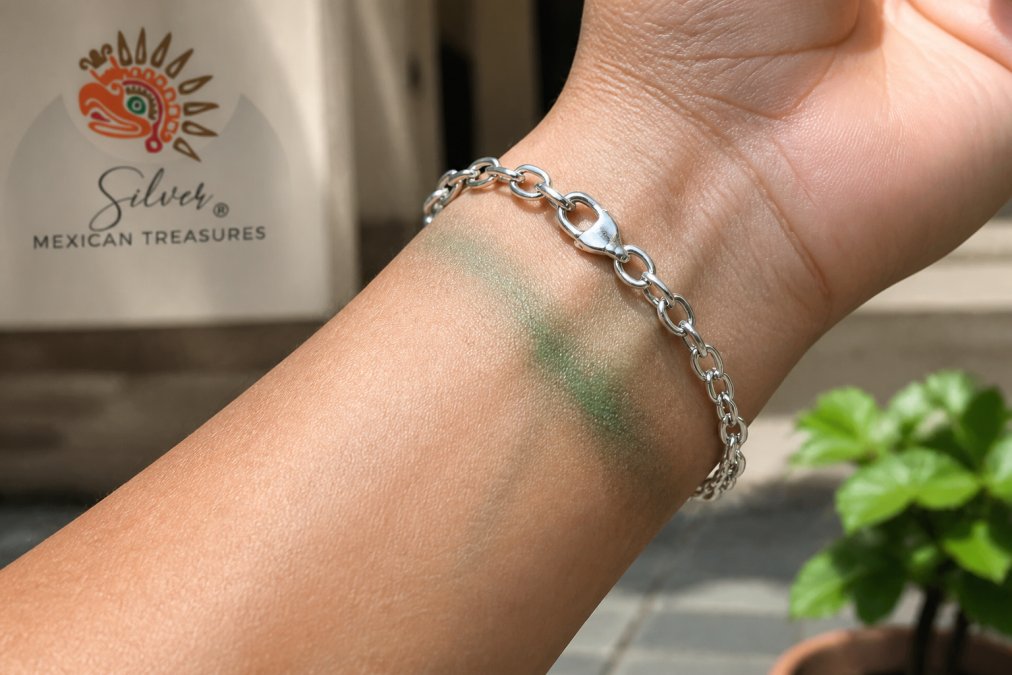
This reaction is harmless. It is not a sign that the sterling silver is fake or low quality. In fact, the opposite is often true. Real sterling silver with genuine copper content is MORE likely to cause this reaction than cheap alloys that use nickel or other base metals instead.
The copper alloy reaction
The copper in sterling silver oxidizes when exposed to moisture, sweat, and your skin's natural pH (Checking your browser). This oxidation creates a dark compound called copper oxide. When this sits against your skin, it leaves a temporary stain.
The reaction accelerates in humid environments. Sweat contains salt and acids that speed up the chemical process. If you wear sterling silver jewelry during exercise or in warm weather, you may notice more discoloration.
The tarnish on the silver itself is a separate process. Tarnish forms when sulfur compounds in the air react with the silver. This creates a dark layer on the surface of the metal. Discoloration on your skin comes from the copper, not the tarnish.
How skin acidity and moisture accelerate oxidation
Your skin's pH level matters. Some people have more acidic skin than others. The more acidic your skin, the faster the copper oxidizes. This is why the same piece of jewelry may turn one person's skin green but not another's.
Moisture is the catalyst. Sweat, humidity, and even hand cream create an environment where copper oxidation happens quickly. When you wear sterling silver in the shower or while exercising, you speed up the process significantly.
Some lotions and perfumes contain chemicals that react with copper. Acidic products like vitamin C serums or certain sunscreens can intensify the reaction. If you notice more discoloration after applying specific products, that product may be accelerating the oxidation.
Is Sterling Silver Hypoallergenic?
Sterling silver is hypoallergenic for most people, but the green skin reaction is not an allergy. This distinction matters because it changes how you prevent and manage the problem.
A true metal allergy is an immune response (Checking your browser). Your body treats the metal as a threat and produces an allergic reaction. Symptoms include itching, redness, swelling, or a rash that spreads beyond the area where the jewelry touches your skin.
The green discoloration from sterling silver turn skin green is a chemical reaction, not an immune response. Your skin is not allergic to the copper. The copper is simply oxidizing and leaving a stain.
Metal sensitivity vs. discoloration
Some people experience both issues. You might have sensitive skin AND get green staining from copper. These are two separate problems that need different solutions.
If you develop a rash or itching after wearing sterling silver, you may have contact dermatitis. This is a reaction to a specific metal in the alloy. Nickel is the most common culprit. Real .925 sterling silver contains no nickel, which makes it safer for people with metal sensitivities.
The green stain alone is not contact dermatitis. It is oxidation. If your skin turns green but feels fine and shows no rash, you do not have a metal allergy.
Contact dermatitis and nickel content
Real sterling silver should be nickel-free. The .925 hallmark guarantees that 92.5% of the metal is pure silver. The remaining 7.5% is typically copper. Copper does not cause contact dermatitis in most people.
Cheap jewelry labeled as "silver-plated" or "silver-tone" often contains nickel as a base metal. This is where true allergic reactions come from. If you have a nickel allergy, always buy certified .925 sterling silver from trusted sources.
At Silver Mexican Treasures, every piece is lab-certified .925 Taxco sterling silver. Our artisans work with copper alloys exclusively, never nickel. This ensures your jewelry is safe for sensitive skin.
How to Prevent Jewelry from Turning Skin Green
The green staining is preventable. You do not have to choose between wearing sterling silver and keeping your skin clean.
Protective coatings and clear nail polish
A clear protective barrier stops the copper from touching your skin. The simplest method is clear nail polish. Paint a thin coat of clear polish on the inside of the ring or the back of the bracelet. This creates a barrier between the copper and your skin.
The polish will eventually wear off. Reapply it every few weeks or when you notice it chipping. This is a temporary solution, not permanent, but it works well for daily wear.
Moisture management and storage
Keep your jewelry dry. Remove sterling silver before showering, swimming, or exercising. Moisture accelerates oxidation dramatically.
Store your jewelry in a dry place. A sealed container or jewelry box with a silica gel packet helps. Humidity in the air will cause tarnish on the silver itself and accelerate the copper oxidation on your skin.
Dry your jewelry immediately after cleaning. Water left on the metal creates an environment for oxidation. Use a soft, lint-free cloth to dry thoroughly.
Avoiding acidic substances and lotions
Apply lotions, perfumes, and sunscreen before putting on your jewelry. Let these products dry completely. This prevents them from sitting between your skin and the metal.
Avoid wearing sterling silver immediately after exercising. Sweat is highly acidic. Wash your skin and dry it completely before putting jewelry back on.
Some people find that wearing their sterling silver over long sleeves or clothing helps. The fabric creates a barrier between the metal and sweat. This is especially useful during physical activity.
How to Tell if Sterling Silver Is Real
Not all silver jewelry is genuine sterling silver. Fake silver or low-quality alloys are more likely to cause discoloration and skin reactions.
The 925 hallmark and lab certification
Real sterling silver carries a .925 or 925 hallmark. This is stamped into the metal and indicates the silver content. If you do not see this mark, the jewelry is not sterling silver.
Lab certification adds another layer of verification. Legitimate jewelers send their pieces to independent labs for testing. The lab confirms the exact silver content and alloy composition.
Every piece from Silver Mexican Treasures carries a lab certification from The Silver Laboratory. This proof of authenticity comes with your purchase. You know exactly what you are getting.
Magnet tests and weight checks
Sterling silver is not magnetic. If a magnet sticks to your jewelry, it contains iron or other ferrous metals. Real sterling silver will not attract a magnet.
Weight is another clue. Sterling silver is denser than many fake metals. A real sterling silver bracelet feels heavier than a similar-looking piece made from cheaper alloys.
How to Clean Tarnished Sterling Silver Jewelry
Tarnish is the dark layer that forms on sterling silver over time. This is different from the green staining on your skin. Both happen with real sterling silver, and both are preventable and reversible.
Gentle cleaning methods for everyday maintenance
Use a soft microfiber cloth to polish your jewelry regularly. This removes light tarnish and keeps the silver shining. Microfiber cloths are gentle and will not scratch the metal.
Polishing cloths and professional restoration
Jewelry wipes designed for silver offer quick maintenance between deep cleanings. Silver Mexican Treasures offers Jewellery Wipes that clean and protect in one step. A pack of 25 wipes keeps your jewelry looking fresh without requiring water or special equipment.

Why Quality Matters for Long-Term Wear
Real .925 sterling silver lasts decades with proper care.
The difference comes down to alloy composition and craftsmanship. High-quality sterling silver uses pure copper as the base metal.
Frequently Asked Questions
Is it safe when sterling silver turns skin green?
Green skin from sterling silver is not toxic or harmful. The discoloration comes from copper oxidation reacting with skin acidity and moisture, not from the silver itself. However, if you experience itching, redness, or a rash, you may have contact dermatitis or a metal sensitivity unrelated to the oxidation. Authentic .925 sterling silver is nickel-free and hypoallergenic when properly maintained, making it safe for most people to wear daily.
How can I tell if my sterling silver is real?
Authentic sterling silver carries a 925 hallmark stamped on the piece, indicating 92.5% pure silver. Lab-certified jewelry comes with documentation from testing laboratories. Real sterling silver is non-magnetic and has a specific weight, it feels substantial in your hand. If you're unsure, request a certificate of authenticity from the seller. Handcrafted pieces from reputable artisans often include detailed craftsmanship marks that distinguish genuine work from mass-produced alternatives.
Does high-quality sterling silver cause skin discoloration?
High-quality .925 sterling silver will still cause green skin discoloration because the reaction depends on the copper content in the alloy and your body chemistry, not on quality. The difference is that high-quality sterling silver maintains its shine and structural integrity longer and resists tarnishing more effectively. Lab-certified pieces and handcrafted jewelry from skilled artisans are made to preserve beauty.
How do I prevent sterling silver from turning my skin green?
Apply a thin layer of clear nail polish to the underside of the jewelry where it contacts your skin, this creates a barrier against copper oxidation. Keep jewelry dry by removing it before showering or swimming, and store it in a cool, dry place. Avoid wearing jewelry when applying lotions, perfumes, or soaps, as these acidic substances accelerate the reaction. Regular cleaning with a polishing cloth removes tarnish before it builds up.