
Mexican Silver Necklaces with Turquoise Accents: A Buyer's Guide
Last Updated: November 22, 2026
Quick Summary
Mexican silver necklaces with turquoise accents pair .925 sterling silver with natural, stabilized, or reconstituted turquoise, so always ask which stone type is set. Check for a .925 hallmark plus a Taxco maker's stamp, and expect hand-set stones and hand-shaped links rather than uniform factory casting.
- A .925 stamp declares 92.5 percent silver content, not origin or craftsmanship quality.
- Natural turquoise shows shifting matrix and uneven color; stabilized stones look more uniform.
- Pendant, beaded strand, and squash blossom are the three dominant necklace styles.
- A 40-45 cm chain sits at the collarbone; 50-55 cm falls at the sternum.
- Keep turquoise away from perfume, chlorine, and liquid dips; buff silver with a soft cloth.
Table of Contents
- Why Mexican Silver Necklaces with Turquoise Accents Stand Apart
- Mexican Silver Jewelry Authenticity: Reading Hallmarks and Purity
- Real vs. Stabilized Turquoise: What Is Actually in the Setting
- Necklace Styles: Pendants, Beaded Strands, and Squash Blossom
- Turquoise Necklace Length Guide: Fit, Layering, and Styling
- How to Care for Turquoise Jewelry and Sterling Settings
- Pricing Mexican Silver Necklaces by Craftsmanship and Stone Quality
- Choosing Your First Mexican Silver and Turquoise Necklace
- Frequently Asked Questions
Why Mexican Silver Necklaces with Turquoise Accents Stand Apart
Mexican silver necklaces with turquoise accents occupy a rare place in jewelry: pieces that carry centuries of regional craft tradition and still look entirely at home with a modern wardrobe. The combination of high-polish sterling silver and natural turquoise is not a trend that arrived last season; it is a living tradition that has been refined across generations of artisans.
What separates these necklaces from mass-produced silver is the relationship between maker and material. A hand-set stone sits deliberately in its bezel. A hand-shaped link carries slight, deliberate variations that machine stamping cannot reproduce. Those details are what collectors notice first, and they are what make a piece worth keeping for decades rather than a single season.
Below, we walk through the criteria that actually matter when you buy: how to read a hallmark, how to judge a stone, how styles differ, and how to size and care for what you choose. The details are where the value lives.
Mexican Silver Jewelry Authenticity: Reading Hallmarks and Purity
Authenticity is the first question worth settling, because everything else follows from it. Genuine Mexican silver jewelry is stamped with a purity mark, and in Taxco that mark is typically accompanied by a maker's or workshop stamp. A .925 stamp means the piece contains 92.5 percent silver alloyed with a harder metal, usually copper, for durability.
What .925 Actually Tells You
The .925 hallmark is a purity declaration: 925 parts silver to 75 parts alloy. It tells you the metal composition, not the origin or the craftsmanship. A cast piece from a large factory can carry the same stamp as a hand-wrought workshop piece, which is why the stamp is a starting point rather than a verdict.
Watch out: a stamp alone is not proof. Look for depth and consistency in the impression, and ask whether the seller can point to independent testing. Our pieces are lab-certified by The Silver Laboratory, and our artisan partners are members of the Consejo Regulador de la Plata.
Taxco Workshops and Regional Techniques
If you want to judge real craftsmanship against cast pieces, our guide on how to tell handmade silver from cast jewelry walks through the tool marks, weight, and seam checks that separate the two.
Real vs. Stabilized Turquoise: What Is Actually in the Setting
Turquoise grading comes down to three things: color consistency, matrix pattern, and whether the stone has been treated. Natural turquoise is cut and polished without resin or dye. Stabilized turquoise has been impregnated with resin to harden it and hold its color, which is common in affordable jewelry and not inherently dishonest, provided the seller says so. Reconstituted turquoise is ground stone mixed with resin and pressed into blocks; it is the furthest from a natural cabochon and should be priced accordingly.
The practical problem is that the three can look similar in a photograph. A few checks narrow it down. Natural turquoise usually shows variation across the face of the stone: matrix lines that shift in width, color that deepens in some areas and lightens in others, and tiny surface irregularities under a loupe. Stabilized stones tend to look more uniform because the resin fills pores and locks the color.
Watch out: a seller who describes a stone only as "turquoise color" or "turquoise tone" is usually signaling a treated, reconstituted, or imitation stone, not a natural cabochon.
Ask directly: is the stone natural, stabilized, or reconstituted? A seller who cannot answer clearly is telling you something.
For a first purchase, natural turquoise in a well-made bezel is the safer investment. It ages with character, and the color deepens rather than fading. Stabilized stones hold up well in everyday wear but rarely appreciate. Reconstituted and dyed stones can be fine fashion pieces at a fashion price; the mistake is paying natural-stone money for them.
Necklace Styles: Pendants, Beaded Strands, and Squash Blossom
Three broad styles dominate this category, and each suits a different wearer. Pendant necklaces center a single stone, often a turquoise cabochon in an ornate silver frame, on a fine chain. Beaded strands string turquoise or silver beads along a continuous line, offering texture and a more casual register. Squash blossom necklaces, with their flared silver blossoms and crescent-shaped naja pendant, are the most ceremonial and the most collectible.
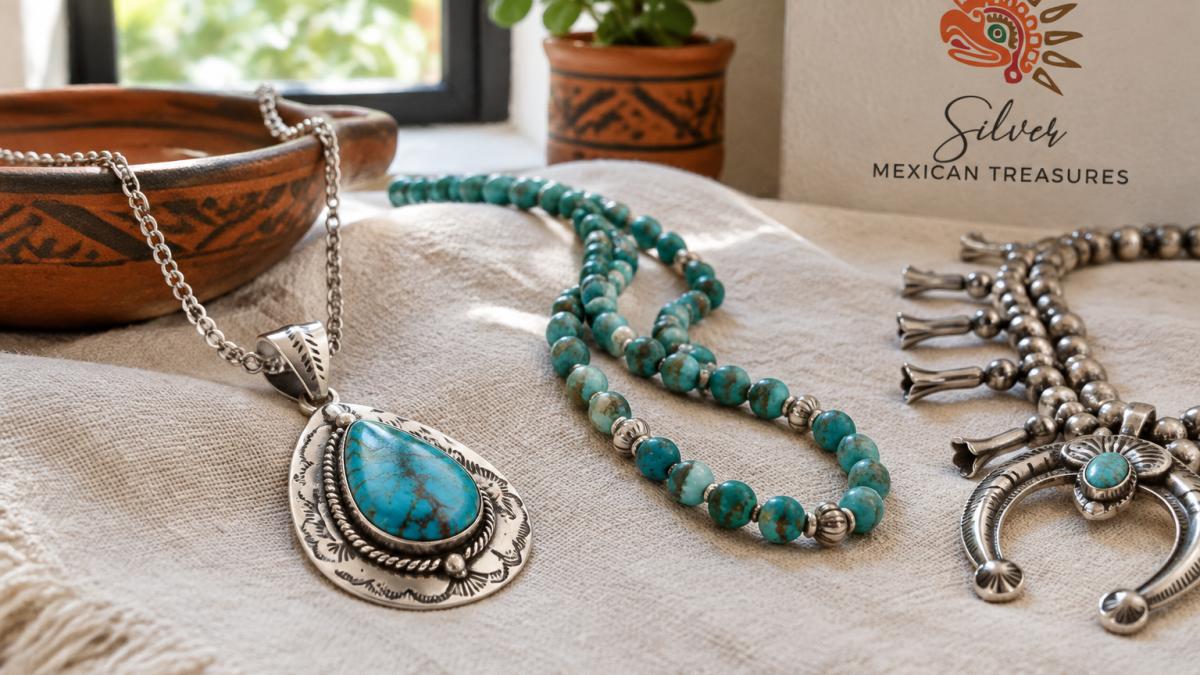
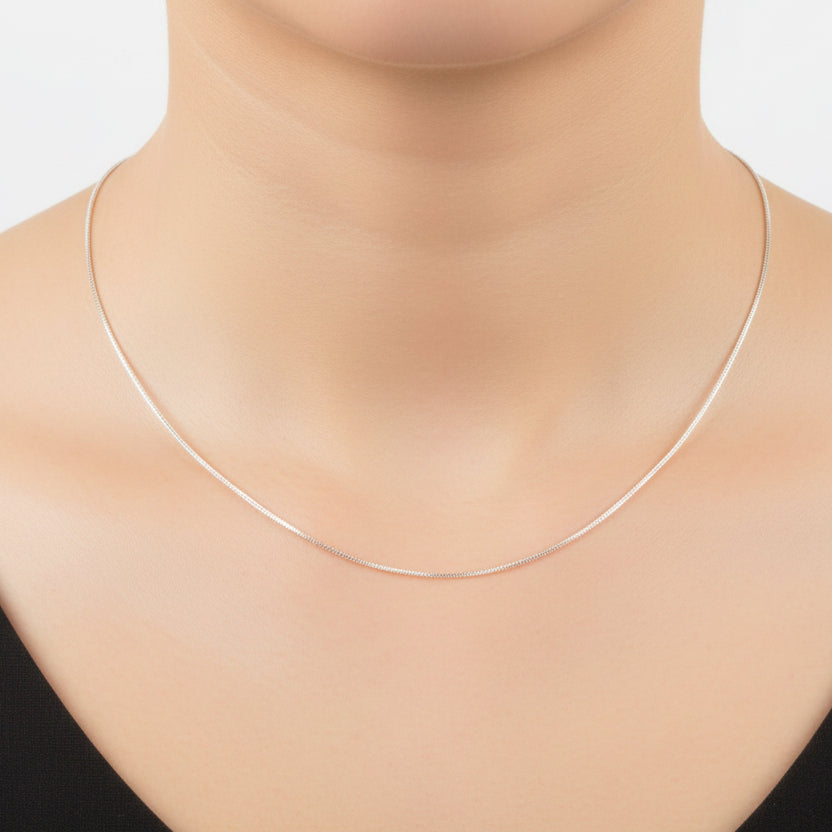
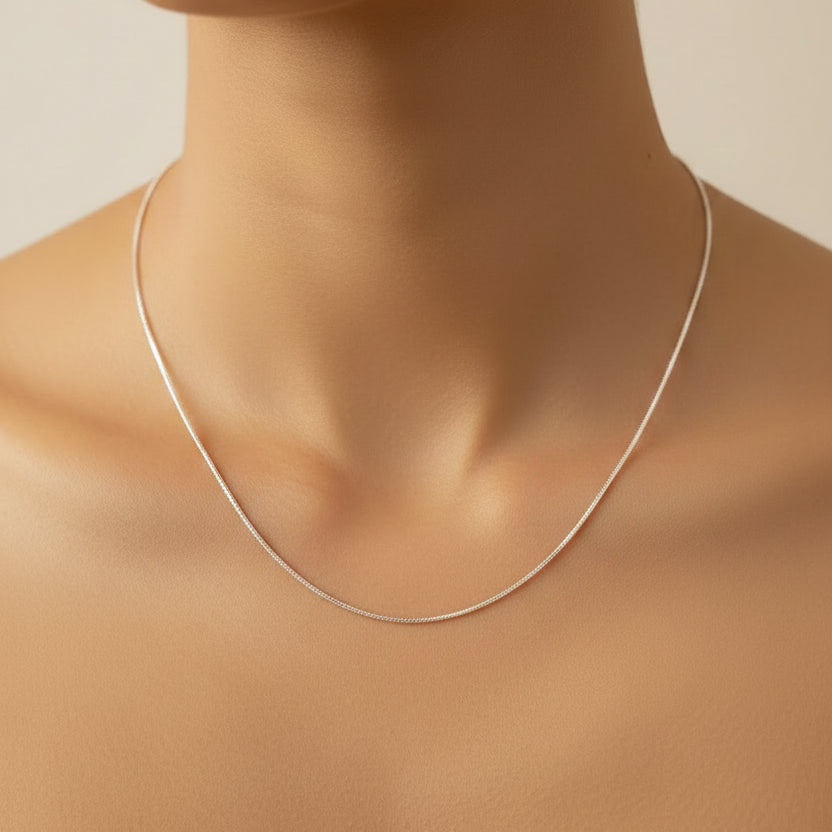
Pendants are the most versatile entry point. Matching pendant size and bail to chain length and width is the detail that decides whether a piece sits correctly, and our guide on which sterling silver chain length suits a pendant covers the measurement method. For layering, a slim snake chain at 45 cm sits just below the collarbone and works with almost any neckline. The Delgada rope chain at $55 CAD is a good example: 3 grams, handcrafted rope work.
Vintage and Antique Pieces vs. New Handmade Work
Vintage pieces carry history and often finer hand detail, but condition becomes the deciding factor: worn bezels, replaced clasps, and stretched links all affect value. New handmade work gives you a known provenance and a maker you can trace. We lean toward new handmade for daily wear and vintage for collectors who can inspect in person.
| Factor | Vintage / Antique | New Handmade |
|---|---|---|
| Detail and character | Often finer hand work | Consistent, traceable |
| Condition risk | Higher, needs inspection | Known at purchase |
| Provenance | Often unclear | Maker and workshop known |
| Best for | Collectors | Daily wear and gifting |
Turquoise Necklace Length Guide: Fit, Layering, and Styling
Length determines how a turquoise necklace reads on the body. A 40-45 cm chain sits at the collarbone and suits open necklines; 50-55 cm falls at the sternum and works over a fine knit; 60 cm and longer drape below the bust and layer best with shorter pieces. Measure at home with a soft tape around your neck, then add the drop you want.
For a single pendant, match the chain to the bail and stone size: a heavy pendant on a 1 mm chain will pull and twist. For layering, keep one focal piece and build around it with plain silver. Our necklace length guide covers measuring at home and matching lengths to necklines. If you want a thin base layer, the Delgada snake chain at $45 CAD sits at 45 cm and weighs 5 grams.
How to Care for Turquoise Jewelry and Sterling Settings
Turquoise is softer and more porous than the silver around it, so care routines have to account for both materials. Keep pieces away from perfume, lotion, chlorine, and prolonged moisture. Remove them before swimming or showering. Store flat or hanging in a dry place, and polish the silver with a soft cloth rather than a liquid dip, which can dull a treated stone.
A common mistake is scrubbing a tarnished bezel with an abrasive pad. It removes the patina that gives handcrafted silver its depth and can scratch the stone. Buff gently, and let a jeweler handle heavy tarnish.
Pricing Mexican Silver Necklaces by Craftsmanship and Stone Quality
Price in this category tracks three variables: metal weight, stone quality, and hours of handwork. A lightweight chain with a small stabilized stone sits at the lower end; a hand-forged setting with a large natural cabochon and intricate detailing sits well above it. Our chains run from $45 to $55 CAD.
A transparent way to compare pieces is to separate the price into its parts. Silver content is the easiest to estimate: sterling is 92.5 percent silver, and at current metal prices a few grams of silver is a small fraction of most necklace prices, so metal alone rarely explains a large gap between two similar pieces.
Ask what you are paying for. If a seller cannot break down metal, stone, and labor, the price is a guess. A useful test is to compare two pieces at the same price and ask which has more handwork visible at the bench: a heavier hand-forged setting, a more carefully matched stone, or a more complex clasp.
Watch out: a very low price on a piece described as "natural turquoise" is a warning sign, because natural stone plus hand-setting plus sterling silver has a floor cost that a bargain price rarely clears honestly.
When you compare pieces, compare the disclosed facts: silver purity, stone type and treatment, gram weight, and maker, not just the number on the tag.
Choosing Your First Mexican Silver and Turquoise Necklace
Start with one piece you will actually wear, then build. For a first purchase, a mid-length pendant on a chain you can also wear alone gives you the most range. Check the hallmark, ask about the stone, and confirm the return terms before you commit. Our guide on how to choose the perfect silver pendant necklace gives a step-by-step framework for matching pendant size to chain.
If you are new to the category and want something for everyday wear, a slim sterling chain is the least risky entry: it will not turn your skin green, it layers with everything, and it lasts. The Delgada snake chain at $55 CAD and the rope chain at $55 CAD are both built for daily wear.
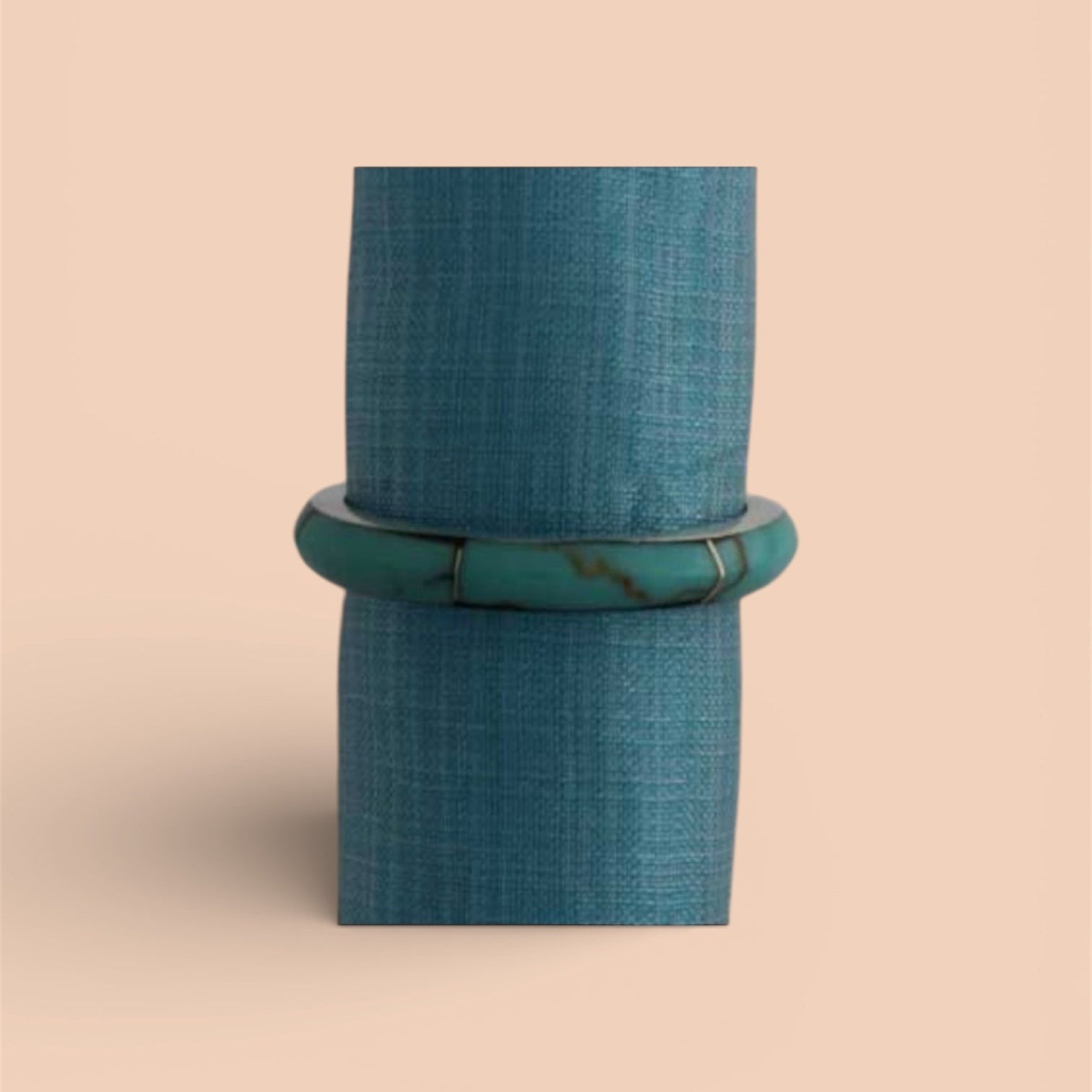
For a color accent that pairs with silver, the Verde ring at $35 CAD features a turquoise-colour stone on a 4 mm sterling band.
The hardest part of buying artisan jewelry is trusting that what arrives matches what you saw. We address that directly: every piece is lab-certified .925 Taxco sterling silver, sourced through direct partnerships with Consejo Regulador de la Plata member artisans, and produced in small batches so no two pieces are identical.
Frequently Asked Questions
How can you tell if a Mexican silver necklace is authentic?
Look for a stamped hallmark reading .925 or 925, usually on the clasp, the back of a pendant, or the inside of a band. That stamp means the piece is 92.5 percent silver. A maker's mark or workshop stamp adds confidence, and a lab certificate from the seller removes most doubt. Weight and finish also help: genuine sterling feels denser than plated base metal and polishes to a deep, even shine rather than a thin bright coating that wears through at the edges.
What is the difference between real and stabilized turquoise?
Natural turquoise is cut and polished stone with no treatment beyond shaping. Stabilized turquoise has been infused with a resin to harden it, which is common because much turquoise is soft and porous. Stabilized stone is still real turquoise, just treated, and it holds color well. Reconstituted or dyed howlite is a different material entirely. Ask the seller which category a stone falls into, and expect natural, high-grade turquoise to cost noticeably more than stabilized.
How should you care for a sterling silver and turquoise necklace?
Keep the piece away from perfume, lotion, chlorine, and household cleaners, and remove it before swimming or showering. Turquoise is porous and can absorb oils and chemicals, which dulls the color over time. Wipe the silver with a soft polishing cloth and clean the stone with a barely damp cloth, then dry it fully. Store the necklace in a dry pouch away from direct sunlight and other jewelry that could scratch the setting.
How do you choose the right necklace length?
A 45 cm chain sits just below the collarbone, which suits most necklines and layers well under a pendant. Shorter chokers of 35 to 40 cm frame the face and work with open collars. Longer strands of 60 cm or more add presence over knitwear. Match the length to the outfit first: a delicate pendant on a 45 cm chain reads as everyday wear, while a beaded or squash blossom piece carries a statement look at 50 cm and above.
