
7 Handmade Silver Bracelets Worth Owning and How to Choose
Quick Summary
Handmade silver bracelets are shaped, soldered, and finished by an artisan with hand tools rather than cast from a mould, so each piece varies slightly. To choose one, check for a clear .925 sterling stamp, look for signs of handwork like uneven curves and tool marks, and measure your wrist before ordering.
- Handmade pieces are formed by hand, so no two bracelets come out exactly alike.
- Look for small asymmetries, tool texture and hand-soldered joins as signs of handwork.
- A .925 stamp confirms sterling silver, but check the bracelet body, not only the clasp.
- Measure your wrist, and for cuffs measure around the knuckles so the bracelet clears the hand.
- The Minimal Sterling Silver Bracelet at $35.00 CAD is the most affordable option in the collection.
Table of Contents
- What Makes a Handmade Silver Bracelet Different
- How to Tell Handmade Silver From Cast Jewelry
- Reading Silver Bracelet Hallmarks: What .925 Really Means
-
7 Handmade Silver Bracelets Compared, With Prices in CAD
- Tallada Bracelet: Wide Carved Cuff at $125.00 CAD
- Huella Bracelet: Classic Handmade Silver at $160.00 CAD
- Sleek Bracelet: Slim and Light at $160.00 CAD
- Connexion Bracelet: Linked Design at $80.00 CAD
- Fuerza Bracelet: Minimalist Chain at $55.00 CAD
- Minimal Sterling Silver Bracelet: Ultra-Light Everyday Design at $35.00 CAD
- Volcánica Bracelet: Lava Stone and Cat Eye at $85.00 CAD
- Handmade vs. Cast Jewelry: Choosing for Wear, Value and Repair
- Sterling Silver Bracelet Care, Sizing and Repair
- Choose Your First Handmade Silver Bracelet
- Frequently Asked Questions
What Makes a Handmade Silver Bracelet Different
A handmade silver bracelet is shaped, soldered, and finished by an artisan with hand tools, not poured or stamped in a factory mould.
Handmade work takes more bench time and skill per piece.
Here is what usually sets a handmade bracelet apart:
- Hand-formed shape: The silver is worked by hand, so curves and edges follow the artisan's eye rather than a mould.
- Visible craftsmanship: Tool marks, hammered textures and carved details give the surface depth.
- Individual finishing: Polishing and sealing are done piece by piece, which affects the final shine.
A handmade bracelet isn't automatically better than a cast one, a well-made cast piece can be sturdy and affordable.
How to Tell Handmade Silver From Cast Jewelry
Handmade silver often shows subtle irregularities cast pieces lack: slightly uneven width, tool texture, and individual soldered joins.
Start with symmetry: lay the bracelet flat and compare the halves. Read the full guide to spotting handmade versus cast pieces for more detail.
Next, look at the surface. Handmade work usually carries faint hammer marks, file lines or carved detail that shifts across the piece.
Check the joins and clasp too.
Watch out: Some cast jewelry is finished with hand polishing, which can hide the evidence.
Reading Silver Bracelet Hallmarks: What .925 Really Means
The .925 stamp is a useful starting point, but understanding what it does and does not tell you matters when comparing sterling silver with plated pieces.
What the .925 stamp actually certifies
The .925 mark indicates sterling silver: 92.5% pure silver alloyed with 7.5% other metal, almost always copper, which adds strength since pure silver is too soft for daily wear. The stamp declares metal content and nothing more, not who made the piece, how it was finished, or whether the clasp will last.
The marks that usually sit next to .925
On handmade and artisan pieces, .925 rarely travels alone. A few companion marks are worth knowing:
- Maker's mark: A stamp or initials identifying the workshop or silversmith, often the most useful provenance signal on handmade work, tying the piece to a specific bench rather than a factory line.
- Country or assay marks: Some jurisdictions require an assay office mark confirming the metal was tested. More common on imported or older pieces, less consistent on small-batch artisan work.
- "Sterling" spelled out: Often appears alongside .925 on North American pieces; the word and the number mean the same thing.
If you can't find a mark, ask the seller where it is.
How to tell sterling from plated
Silver-plated jewelry is a base metal (often brass or copper) coated with a thin silver layer. It can carry a .925 stamp if the plating itself is sterling, so the stamp alone doesn't settle the question. A few practical checks help:
- Look at wear points. Plating wears through first at the clasp, link edges, and inside a cuff. A different-colored metal showing through means the piece is plated regardless of any stamp.
- Check the weight. Sterling is dense; a bracelet that feels unexpectedly light for its size is a warning sign.
- Look for a seam or sandwich. Plated pieces are sometimes made by folding a silver layer over a base core, which can leave a visible line at the edge.
Watch out: A .925 stamp on a clasp does not by itself confirm the whole bracelet's metal, so check the mark on the bracelet itself as well.
Why this matters more for handmade pieces
Ask the maker directly about the alloy and where the stamp sits; a clear answer gives you more than the stamp alone.
A quick checklist before you buy
- Find the .925 stamp and confirm it is on the bracelet body, not only the clasp.
- Look for a maker's mark or workshop stamp nearby.
- Inspect the wear points for any sign of a base metal showing through.
- Ask the seller what the base metal is if the piece is plated or unclear.
- Read the return policy before you buy.
Sterling silver is the right standard for a bracelet you intend to wear and keep. Knowing how to read the marks, and what they leave out, is what turns that standard into a real buying decision.
7 Handmade Silver Bracelets Compared, With Prices in CAD
Here is how the seven bracelets in our current collection compare. Prices are shown in CAD as listed.
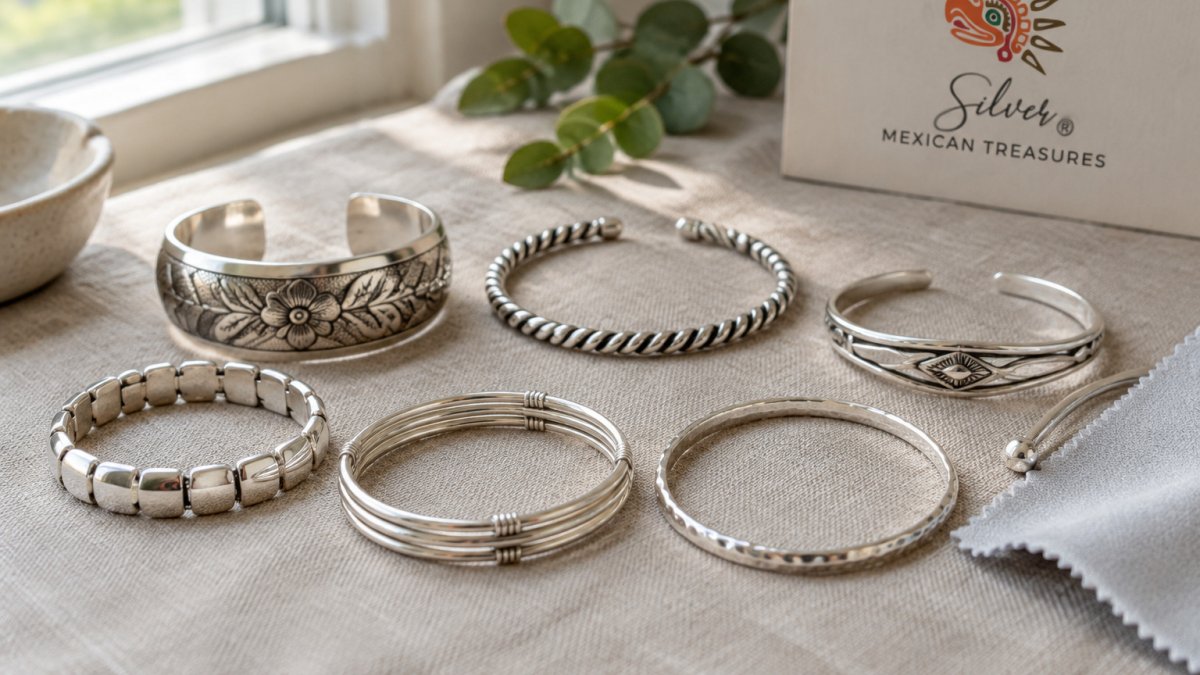
| Bracelet | Price (CAD) | Style | Best For |
|---|---|---|---|
| Tallada Bracelet | $125.00 | Wide carved cuff | Statement wear |
| Huella Bracelet | $160.00 | Classic handmade bracelet | Everyday layering |
| Sleek Bracelet | $160.00 | Slim, minimalist profile | Polished daily wear |
| Connexion Bracelet | $80.00 | Sleek link design | Gifts and everyday style |
| Fuerza Bracelet | $55.00 | Minimalist chain | Lightweight daily wear |
| Minimal Sterling Silver Bracelet | $35.00 | Ultra-light everyday design | Subtle, barely-there wear |
| Volcánica Bracelet | $85.00 | Lava stone and cat eye bead | Mixed-material styling |
Price (CAD)
Tallada Bracelet: Wide Carved Cuff at $125.00 CAD
The Tallada Bracelet is a wide, carved-inspired cuff at 1.8 cm wide, a good choice if you want one bold piece rather than a stack. Priced at $125.00 CAD; view the full Tallada Bracelet product page for details.

Note that the slip-on bangle style needs to fit over the hand.
Huella Bracelet: Classic Handmade Silver at $160.00 CAD
The Huella Bracelet is a sleek, classic handmade piece at 0.6 cm wide. It works with casual and dressier outfits and layers well with other slim bracelets. At $160.00 CAD it sits at the higher end of this list. See the Huella Bracelet's details and price before you decide.

Sleek Bracelet: Slim and Light at $160.00 CAD
The Sleek Bracelet has a slim 0.6 cm profile and a 21 cm length. It's comfortable all day and stacks well with other silver pieces. Price: $160.00 CAD.
Connexion Bracelet: Linked Design at $80.00 CAD
The Connexion Bracelet has a clean 5 mm width and a linked silhouette. At $80.00 CAD, it is one of the more accessible handmade options and a practical gift choice.
Fuerza Bracelet: Minimalist Chain at $55.00 CAD
The Fuerza Bracelet is a lightweight minimalist chain at 18.5 cm long. It has a fluid drape against the wrist and suits everyday wear. It is priced at $55.00 CAD.
Minimal Sterling Silver Bracelet: Ultra-Light Everyday Design at $35.00 CAD
At $35.00 CAD, this is the most affordable piece in the collection. It weighs very little and sits quietly on the wrist, making it a good first handmade silver bracelet.
Volcánica Bracelet: Lava Stone and Cat Eye at $85.00 CAD
The Volcánica Bracelet mixes silver cubes with volcanic lava stone and a cat eye bead. It is a good option if you like combining natural texture with polished silver.
Also in the collection: The Volcano Bracelet ($65.00 CAD), the Placa Bracelet ($80.00 CAD) and the Círculos Cuff ($90.00 CAD) round out the range.
Handmade vs. Cast Jewelry: Choosing for Wear, Value and Repair
For everyday wear, handmade sterling silver holds up well if properly finished and cared for.
On value, a handmade piece reflects artisan time and a traceable workshop; a cast piece reflects volume production.
On repair, handmade bracelets are often easier to adjust, since the artisan can reshape a link or resize a cuff by hand.
Sterling Silver Bracelet Care, Sizing and Repair
Care, fit, and repair are where most jewelry guides get vague. This section covers each with enough specificity to use, including the wrist-size styling question most guides skip.
Care: what actually causes tarnish
Sterling silver tarnishes when it reacts with sulfur compounds and moisture, perfume, lotion, hair products, sweat, household cleaners. Read the complete sterling silver care guide for full guidance.
The practical routine:
- Put jewelry on last. Let perfume and lotion dry before the bracelet goes on.
- Take it off first. Remove before showering, swimming, washing dishes, or applying anything to your skin.
- Store dry and sealed. A small zip bag with the air pressed out slows tarnish dramatically; a soft pouch works short-term but lets air through.
Watch out: Abrasive polishes and toothpaste scratch sterling. On a handmade piece with tool marks or a carved surface, that damage is permanent and cannot be polished back out without losing the texture.
Sizing: measure the wrist, then match the style
Wrist size is the single most common reason an online bracelet purchase goes wrong, and it is rarely addressed in buying guides. Measure with a flexible tape snug around the wrist bone, then add an allowance based on the style:
- Chain and link bracelets: Add 1.5-2 cm for a comfortable drape. A chain that sits exactly at wrist measurement will feel tight and pull at the clasp.
- Cuffs and bangles: These must pass over the widest part of the hand, not just the wrist. Measure around the knuckles with the thumb tucked in, and choose a cuff opening that clears that measurement.
- Wide cuffs: A wide cuff (roughly 1.5 cm and up) needs a larger opening than a slim one because the width reduces flexibility. If between sizes on a wide cuff, size up.
A common pattern is for buyers to order by wrist measurement alone and then find a bangle will not clear the hand. If you are buying a slip-on style, the hand measurement is the one that matters.
Styling by wrist size
Fit is also a styling question. Slim wrists (under about 15 cm) suit narrow chains, slim cuffs, and stacks of two or three light pieces, a wide cuff can overwhelm the proportion.
These are starting points, not rules. Measure once, note the number, and use it to filter styles before you fall for a photo.
Repair and restoration
Handmade sterling bracelets are generally repairable, and that is part of their long-term value. A skilled silversmith can usually:
- Reshape a bent cuff by annealing the silver (heating it to soften it), reforming it on a mandrel, and re-polishing.
- Re-solder a broken join at a clasp or link, matching the original solder color where possible.
- Replace a worn clasp with a comparable finding, which is often the first part to fail on a daily-wear piece.
Harder to fix: deep scratches on a carved or hammered surface, stretched links on a pulled chain, and plating worn through (which needs re-plating, not repair).
Watch out: Do not force a bent cuff back into shape yourself. Sterling work-hardens as it is bent, and cold-forcing a cuff can crack it at the stress point.
A simple maintenance rhythm
Wipe the bracelet with a soft cloth after each wear, store it sealed, and polish every few months. Follow step-by-step cleaning instructions for a deeper clean. Check the clasp and joins twice a year for looseness. That routine keeps a handmade sterling bracelet looking close to new for decades, the point of buying one built to last.
Choose Your First Handmade Silver Bracelet
Start with how you plan to wear it. For something minimal for daily use, the Minimal Sterling Silver Bracelet or the Fuerza Bracelet are strong starting points.
Then check the basics: a clear .925 stamp, visible signs of handwork, and a fit you can measure before ordering.
Frequently Asked Questions
How can you tell if a silver bracelet is handmade?
Look for small irregularities that machines do not produce: slightly uneven link shapes, hand-finished edges, visible tool marks in the metal and soldered joints that are neat but not identical from one side to the other. Cast pieces tend to look uniform and have fine seam lines where the mould was joined. If a seller cannot describe how the bracelet was made, treat that as a warning sign.
What does .925 mean on a silver bracelet?
The .925 mark means the piece is 92.5 percent pure silver, with the remaining 7.5 percent usually copper, which adds strength for everyday wear. This is the standard for sterling silver. Look for the stamp on the clasp or inside the bracelet. Silver Mexican Treasures lists its pieces as certified .925 sterling silver. The Huella Bracelet, for example, is priced at $160.00 CAD.
How should a silver bracelet fit?
Measure your wrist with a soft tape, then add about 1.5 to 2 cm for a comfortable fit on a rigid bangle or cuff. Slip-on styles like the Tallada Bracelet (6 cm diameter, 1.8 cm wide) need enough room to pass over the hand without pinching. A wider cuff sits more snugly, so a little extra room helps it move freely.
How do you care for a handmade sterling silver bracelet?
Store the bracelet dry, away from perfume, lotion and harsh chemicals, and remove it before swimming or bathing. Polish gently with a soft silver cloth to keep the high-polish finish bright. The Volcano Bracelet's listing advises avoiding prolonged contact with water, perfume and harsh chemicals. Regular light polishing prevents heavy tarnish from building up.
