
How to Store Silver Jewelry in a Tarnish-Resistant Bag
Last Updated: November 15, 2026
Quick Summary
To store silver jewelry in a tarnish-resistant bag, clean and dry the piece completely, fasten clasps, add an anti-tarnish strip beside the jewelry, press out excess air, and seal the zip-top fully. Store the bag flat in a drawer away from sunlight, and keep one piece per bag to prevent scratches and tangling.
- Wash silver with mild dish soap and warm water, then dry fully before packing.
- Choose a zip-top anti-tarnish pouch over a drawstring bag for an airtight seal.
- Packing a tarnish-resistant bag takes about two minutes per piece.
- Replace anti-tarnish strips when they show color shift, stiffness, or crusting.
- Do a full collection check twice a year and store bags away from heat.
Table of Contents
- Why Silver Tarnishes and How a Tarnish-Resistant Bag Stops It
- How to Clean Sterling Silver Before Storage
- Choosing Anti-Tarnish Bags for Silver Jewelry: Size, Material, and Closure
- Step-by-Step: Packing Jewelry in a Tarnish-Resistant Bag
- How to Store Silver Necklaces Without Tangling
- Anti-Tarnish Strips for Jewelry Storage: Care and Replacement
- Troubleshooting Tarnish Inside a Storage Bag
- Protecting Your Sterling Silver Collection Between Wears
- Frequently Asked Questions
Why Silver Tarnishes and How a Tarnish-Resistant Bag Stops It
Silver tarnish is a chemical reaction, not a sign of poor quality. When sterling silver meets sulfur compounds in the air, the surface darkens into that familiar brown-black film. A tarnish-resistant bag slows this reaction by blocking the two things tarnish needs most: air and moisture.
Here is the key insight most guides skip. Tarnish is surface-level. It does not eat into the metal. That means the right storage stops the problem before it starts.
Sterling silver is 92.5 percent pure silver mixed with copper for strength. The copper reacts first, which is why .925 pieces can dull faster than fine silver. Our jewelry is lab-certified .925 Taxco sterling silver, so understanding that alloy matters for long-term care.
What makes a bag work comes down to three jobs:
- Blocking airflow with a tight seal
- Keeping humidity away from the metal
- Holding anti-tarnish material close to the piece
The U.S. Geological Survey's explanation of silver tarnishing confirms that sulfur exposure drives the reaction, which is why enclosed storage outperforms open trays.
How to Clean Sterling Silver Before Storage
Never store silver dirty. Oils, lotions, and skin residue trap moisture against the metal and speed up tarnish. A clean piece stays bright far longer in any storage bag.
Follow these steps before anything goes into a pouch:
- Wash with mild dish soap and warm water
- Use a soft cloth, never paper towels
- Rinse completely and pat dry
- Let the piece air dry for a few minutes
- Check crevices and clasps for leftover moisture
Skip toothpaste and baking soda scrubs, which are abrasive and can scratch polished surfaces over time.
For a full walkthrough of the cleaning method, see our guide on how to clean sterling silver jewelry. If you want a quick polish before packing, our jewellery wipes handle the job without water.
Watch out: storing a piece while it is still damp is the fastest way to grow tarnish inside a sealed bag. Dry thoroughly, every time.
Choosing Anti-Tarnish Bags for Silver Jewelry: Size, Material, and Closure
The right anti-tarnish bag for silver jewelry comes down to three choices: size, material, and closure. Get these wrong and the bag does little more than a plastic sandwich bag.
Size. The pouch should hold the piece snugly with a little room. Too loose means trapped air. Too tight means scratches and bent chains. Match the bag to the item, not the other way around.
Material. Look for these features:
- Tarnish-resistant flannel or soft fabric lining
- Acid-free construction
- A sulfur-absorbing treatment built into the fabric
- No PVC or harsh plastics that off-gas
Closure. A zip-top seal beats a drawstring every time. Zippers create an airtight barrier that keeps humid air out. Drawstrings leave gaps.
| Bag Type | Best For | Seal Quality | Reusable |
|---|---|---|---|
| Zip-top anti-tarnish pouch | Single pieces, everyday storage | Strong | Yes |
| Flannel drawstring bag | Travel, soft protection | Weak | Yes |
| Sealed pouches with tab | Long-term storage | Strong | Limited |
| Standard zip-lock bag | Budget backup only | Moderate | Yes |
A common mistake is buying one big bag for a whole collection. Individual storage prevents scratching and tangling, and it keeps each piece wrapped in its own protective layer.
Step-by-Step: Packing Jewelry in a Tarnish-Resistant Bag
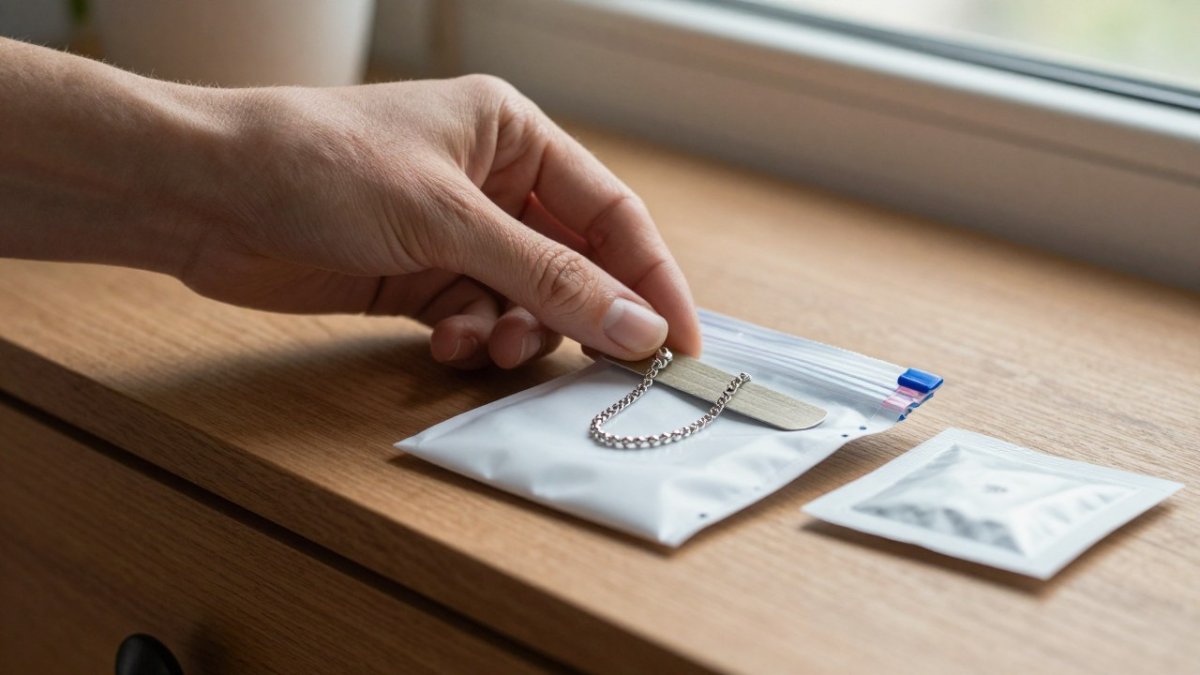
Packing a tarnish-resistant bag takes about two minutes per piece. Do it right and the silver stays bright for months between wears.
- Clean and dry the piece completely. No shortcuts here.
- Fasten clasps and lay chains flat. This prevents tangling and kinks.
- Add an anti-tarnish strip or tab. Place it beside the jewelry, not on top of it.
- Drop in a silica packet if you live in a humid climate.
- Press out excess air before sealing.
- Seal the zip-top fully, running a finger along the closure.
- Store flat in a drawer or jewelry box, away from sunlight.
Label each bag if you own many pieces. A small note saves you from opening every pouch to find one necklace.
How to Store Silver Necklaces Without Tangling
Chains tangle when they move freely. The fix is to lock each necklace in place before it goes into storage.
Try these methods:
- Fasten the clasp, then lay the chain flat in the bag
- Thread the chain through a straw cut to length for extra structure
- Use a small piece of acid-free tissue paper to cushion the chain
- Store one necklace per bag, always
For pieces you wear often, a hanging organizer keeps chains separated and visible. For long-term storage, flat pouches win.
If you are browsing for storage-friendly designs, explore the necklaces and chokers collection on our website.
Anti-Tarnish Strips for Jewelry Storage: Care and Replacement
Anti-tarnish strips work by adsorbing sulfur compounds before they reach the silver surface. Once the strip's active material is saturated, it stops protecting and the bag becomes ordinary fabric. The problem is that no universal replacement interval exists, because saturation depends on how much sulfur enters the bag, how often it is opened, and how humid the storage location is.
Instead of trusting a calendar, read the strip itself:
- Color shift. Many treated strips darken or discolor as they load up with sulfur. A visible change is a reliable cue.
- Stiffness or crusting. A strip that feels stiff, brittle, or crusty has usually lost its absorbent capacity.
- New tarnish on a clean piece. If a piece you packed clean and dry shows fresh film, the strip is the first suspect.
- Odor. A faint sulfur or stale smell inside the bag suggests the strip is exhausted and the seal is letting air in.
A practical habit is to write the packing date on the outside of each bag with a permanent marker. That gives you a reference point rather than a rule. When you check the bag, compare the strip's condition against the date and against how often the bag has been opened. Replace the strip when any of the cues above appear, not on a fixed schedule.
Silica packets need the same attention. Silica absorbs moisture until it is saturated, then stops helping. Some silica packets change color as they load up; others give no signal. Recharge reusable silica by drying it in a warm, dry spot according to the product instructions, or replace single-use packets when they no longer seem to keep the bag dry.
Storing a bag in a bathroom, laundry room, or kitchen exposes it to more humidity and sulfur than a bedroom dresser or closet, so strips in those locations may saturate faster and need more frequent inspection.
Keep a small stock of spare strips and silica packets so a saturated strip can be swapped the moment you notice it, rather than after the next tarnish appears.
Troubleshooting Tarnish Inside a Storage Bag
Tarnish inside a sealed bag is a signal, not a mystery. Work through the causes in order, because the fix for one cause will not solve another.
1. Was the piece completely dry when packed? Residual moisture in a clasp, chain link, or stone setting is the most common cause.
2. Was the piece clean? Skin oils, lotion, perfume, and hair product residue trap moisture and sulfur against the metal.
3. Is the seal actually holding? Run a finger along the zip closure and look for debris, creases, or a worn track. A seal that looks closed can still pass air.
4. Is the anti-tarnish protection exhausted? A saturated strip or spent silica packet leaves the bag doing nothing. Check the strip for color shift, stiffness, or crusting, and replace it if any cue is present.
5. Is the storage location the problem? A bathroom drawer, a spot near a heating vent, or a shelf in direct sun exposes the bag to more humidity and heat than a bedroom dresser or closet.
6. Are incompatible pieces stored together? This is the cause most guides skip. Sterling silver, silver-plated pieces, pearls, and some gemstones should not share a bag.
| Problem | Likely Cause | Fix |
|---|---|---|
| Piece tarnished in the bag | Stored damp or dirty | Clean, dry fully, repack |
| Bag seal failed | Worn zipper or trapped debris | Replace the bag |
| Tarnish returns fast | Saturated strip or high humidity | New strip plus silica packet |
| Mixed pieces discoloring | Metals reacting together | Store each piece separately |
| Pearls or gemstones dulled | Contact with treated fabric or moisture | Move to acid-free tissue storage |
Watch out: if tarnish keeps returning after a fresh strip, a clean bag, and a dry piece, the storage location is the remaining variable.
A diagnostic habit beats guesswork: when a piece tarnishes in storage, note which cause applied before repacking, so the same mistake does not repeat across the collection.
Protecting Your Sterling Silver Collection Between Wears
A collection needs a routine, not a one-time fix. The pieces you wear daily face the most exposure, so give them a quick wipe before they go back in the bag.
Build these habits:
- Wipe each piece with a soft cloth after wearing
- Keep bags sealed between uses
- Store away from direct sunlight and heat
- Rotate strips on a set schedule
- Do a full collection check twice a year
For deeper guidance on caring for handmade pieces, our article on handmade sterling silver jewelry reviews and care covers quality markers and fair trade standards. And if you want to understand what .925 recycled sterling silver actually means, read why choose recycled sterling silver.
Silver care rewards consistency. A clean piece, a sealed tarnish-resistant bag, and a fresh strip do more than any polish. At Silver Mexican Treasures, every piece is lab-certified .925 Taxco sterling silver, handcrafted in small batches by artisans who are members of the Consejo Regulador de la Plata. Our direct partnerships and fair trade commitment mean your jewelry arrives ready to treasure for years. Explore the collection and give your silver the storage it deserves.
Frequently Asked Questions
Should silver jewelry be cleaned before storing it in a tarnish-resistant bag?
Yes. Oils, sweat, and dust left on the surface can speed up tarnish and trap moisture inside the bag. Clean each piece with a soft cloth or mild silver polish, rinse if the polish requires it, and let it dry completely before sealing it in. Even a thin film of moisture is enough to start oxidation, so give pieces time to air dry fully. Cleaning first also means the bag starts protecting a clean surface rather than locking in residue.
Can you store different silver jewelry pieces in the same tarnish-resistant bag?
It is better to give each piece its own bag. Sterling silver is soft, and pieces that touch can scratch each other or tangle, especially chains. If you are short on bags, wrap each item in acid-free tissue paper or tarnish-resistant flannel before placing several in one pouch. Keep pieces with gemstones, pearls, or plated finishes separate from plain silver so harder stones do not scuff the metal.
Do anti-tarnish bags prevent silver from tarnishing completely?
No bag stops tarnish forever. A tarnish-resistant bag slows oxidation by limiting air exposure and, in treated bags, by absorbing sulfur compounds. How long protection lasts depends on humidity, how often the bag is opened, and whether the piece was clean and dry when stored. Check stored jewelry every few months, replace spent anti-tarnish strips, and reseal bags promptly after use to get the most from the protection.
Can you use ordinary plastic bags to store sterling silver jewelry?
Standard plastic bags are not a good choice. Many contain PVC or other plastics that can release sulfur or chemicals that actually accelerate tarnish, and they trap moisture. Use bags made for jewelry storage instead: sulfur-free, acid-free pouches or zip-top bags lined with tarnish-resistant material. If a bag smells plasticky or rubbery, keep silver out of it. A proper anti-tarnish bag costs little and protects the finish far better.
