
Is Taxco Silver Worth the Price? A Real Value Guide
Table of Contents
- What Makes Taxco Silver Worth the Investment
- How to Date Taxco Silver Jewelry Pieces
- Identifying Taxco Silver Hallmarks and Authentication
- The Value of Vintage Mexican Sterling Silver
- Investment vs. Wearable Value: Which Matters to You
- Fair Trade and Ethical Sourcing: The Hidden Cost Justification
- Maintenance and Long-Term Durability Costs
- Conclusion
- Frequently Asked Questions
Last Updated: October 7, 2026
What Makes Taxco Silver Worth the Investment
Does Taxco silver justify its premium price? That depends on two questions: Is it authentic, and will it hold its value? At Silver Mexican Treasures, we've sourced directly from Taxco artisans for years, and the answer to both is yes, if you understand what you're buying.
Taxco silver commands higher prices than mass-produced sterling for a reason: the .925 standard, artisan craftsmanship, and cultural heritage create a fundamentally different product than bulk jewelry retailers offer.
The .925 Sterling Silver Standard
Sterling silver is 92.5% pure silver, with the remaining 7.5% typically composed of copper or other metal alloys. This purity level represents the international benchmark for genuine silver jewelry and is what the hallmark "925" signifies on authentic pieces.
Pure silver is too soft for jewelry, bending and denting with regular wear. Alloy metals add structural integrity without compromising silver's luster or precious metal status, so Taxco pieces keep both durability and that distinctive shine collectors recognize.
The .925 standard matters because it's verifiable. A hallmark stamped into a Taxco piece guarantees purity recognized across global jewelry markets, backed by assay testing. Many mass-produced "silver" items sold online carry lower purity or aren't sterling at all, just silver-plated base metal that tarnishes and flakes within months.
Artisan Craftsmanship vs. Mass Production
The difference between handcrafted Taxco silver and factory-made jewelry isn't subtle. Artisans shape each piece individually, meaning no two items are identical. The hand-twisted links on the Torzal Cuff Links ($95.00), for example, carry slight variations that signal authentic metalsmithing rather than machine stamping.

Mass production prioritizes speed and uniformity: machines cut identical shapes and produce thousands of units daily, lowering costs but eliminating craftsmanship entirely. Handcrafted pieces require skilled labor and time machines don't incur, which is why Taxco pieces cost more, you're paying for human skill, not just raw material.
The durability difference is real too. Artisans trained for years know how to maximize strength at stress points and which techniques create lasting shine versus premature tarnishing, knowledge gained through apprenticeship, not manuals.
How to Date Taxco Silver Jewelry Pieces
Dating a piece matters for authenticity and resale value. Vintage Taxco silver often commands premium prices because scarcity increases desirability, but only if you can verify its age.
Reading Maker's Marks and Signatures
Maker's marks are stamped impressions that identify the artisan or workshop responsible for creating the piece. These marks appear alongside the .925 hallmark and often include initials, names, or workshop symbols unique to specific silversmiths in Taxco.
A maker's mark is itself a credibility signal. Anonymous silver is cheaper and harder to trace; when an artisan stamps their name into a piece, they claim ownership, which carries reputational weight.
Different eras used different marking styles. Pre-1970s pieces often show hand-stamped marks that appear irregular or off-center, while post-1980s Taxco silver shows more uniform, machine-assisted stamping.
Some of the most respected Taxco makers are affiliated with the Consejo Regulador de la Plata, which certifies authentic Mexican silver artisans. Pieces bearing these marks carry institutional credibility beyond the individual artisan's reputation.
Design Aesthetic and Era Indicators
Taxco silver design evolved through distinct periods. Geometric patterns popular in the 1950s and 1960s differ markedly from the organic, nature-inspired designs that dominated the 1970s: bold, angular forms suggest mid-century production, while flowing, sculptural elements point to later decades.
Material pairings also date pieces. Turquoise-and-silver combinations peaked in the 1960s-1970s, while minimalist silver-only designs gained prominence in the 1990s and 2000s. Stone-setting techniques evolved too: older pieces often feature ornate bezels, while contemporary work emphasizes sleek, integrated settings.
Patina tells a story too. Genuine aging creates a darkened, oxidized surface that develops character over decades, a chemical transformation rather than removable tarnish. Collectors often value patina as proof of authenticity and age, though some prefer the bright finish of recently cleaned pieces.
Identifying Taxco Silver Hallmarks and Authentication
The hallmark is your primary authentication tool. Every legitimate Taxco sterling silver piece carries at least two stamps: the .925 purity mark and a maker's mark identifying the artisan or workshop.
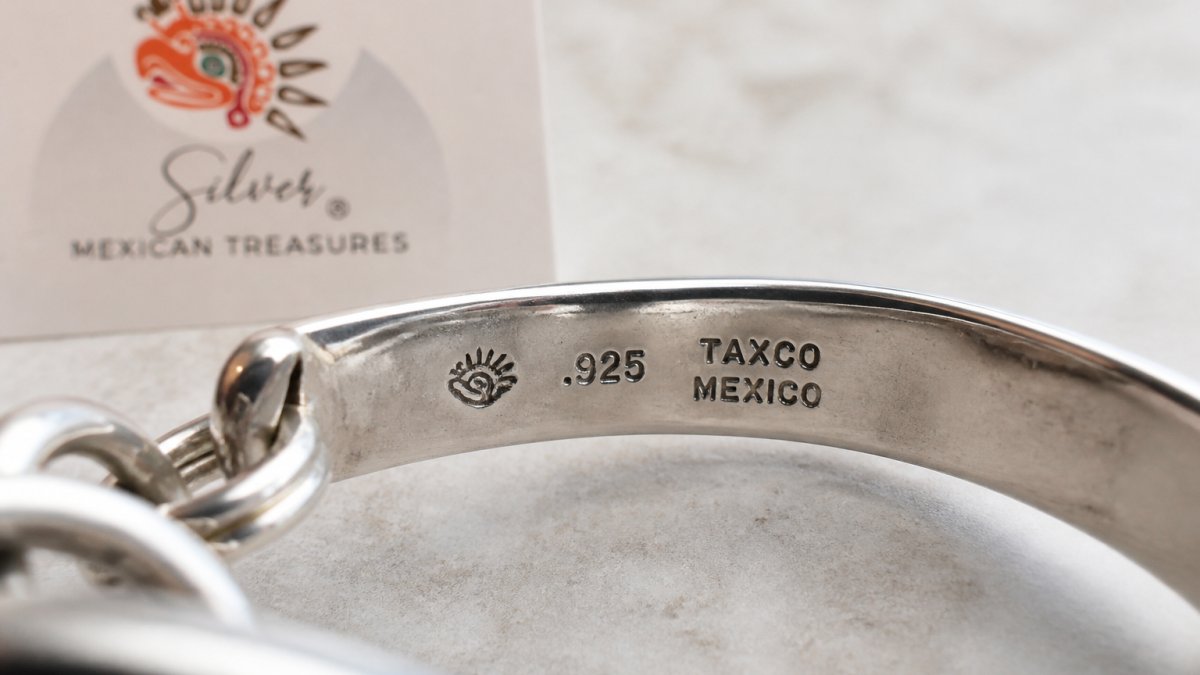
The .925 mark appears as "925," "STERLING," or both, while maker's marks vary widely, from initials to full names or workshop symbols. A piece without clear, well-struck hallmarks raises immediate authenticity questions.
Spotting Counterfeits and Plated Imposters
Counterfeit Taxco silver exists, and it's becoming more sophisticated. The most common fakes are plated items masquerading as solid sterling and unmarked pieces claiming Taxco origins without verification.
Silver-plated items have a thin layer of real silver bonded to a base metal core, and the plating wears away with use, exposing cheaper metal underneath.
Counterfeits often lack proper hallmarks or carry poorly-struck stamps that don't match known maker's marks.
Weight is another indicator. Sterling silver is dense, so a piece that feels surprisingly light for its size might be plated or contain excess base metal alloy.
Price can signal problems too. If a piece claiming to be authentic Taxco sterling costs significantly less than comparable items from verified sources, investigate further, since genuine artisan work carries material and labor costs budget prices can't reflect.
The Value of Vintage Mexican Sterling Silver
Vintage Taxco silver occupies a unique position in the collectible jewelry market, combining precious metal content with historical significance, cultural authenticity, and artisan craftsmanship, a combination that drives collector demand and resale value.
Condition, Patina, and Collector Appeal
The condition of a vintage piece directly influences its desirability and market price. Collectors distinguish between several condition grades, each affecting value differently.
Pieces in excellent condition, minimal wear, bright polish, no dents or damage, command premium prices, appealing to collectors seeking investment-grade items.
Good condition pieces show light wear but retain structural integrity and most of their original finish. Many collectors prefer this grade because it balances visual appeal with authenticity.
Patina, the darkened oxidized surface that develops over decades, presents a decision point for collectors. Some view patina as proof of authenticity and age, adding character and value.
Linked Chain - Handmade 45 cm .925 Sterling Silver Chain in Mexican Silver →
Damage, dents, cracks, missing stones, or broken clasps reduce value significantly, since repair costs can exceed market value. Damaged items attract fewer buyers unless exceptionally rare or historically significant.
Resale Value and Market Fluctuation
The secondary market for vintage Taxco silver fluctuates based on several factors. Precious metal prices directly influence value, as silver's commodity price rises, so does the baseline value of any sterling piece.
Collector trends also drive value as design aesthetics cycle in and out of fashion. Geometric 1960s patterns resurged in the 2010s with mid-century modern design, and 1970s organic, sculptural pieces saw renewed interest as bohemian aesthetics returned.
Provenance matters significantly. A piece with documented history, perhaps owned by a notable collector or shown in a gallery, carries premium value. Verified maker attribution and clear dating command higher prices than unmarked or undated items of similar quality.
Auction results provide market benchmarks: comparable pieces sold at auction or through reputable dealers establish price ranges.
Investment vs. Wearable Value: Which Matters to You
This distinction shapes how you should evaluate Taxco silver's worth: are you buying a piece to wear and enjoy, or acquiring an asset you expect to appreciate over time?
For everyday wear, the Delgada Sleek Snake Chain Necklace ($45.00) exemplifies practical wearable value. At 5 grams, it's light enough for all-day comfort. The handcrafted construction ensures durability without sacrificing aesthetic refinement.

These approaches require different buying strategies. Wearable pieces should prioritize comfort, durability, and personal taste; investment pieces require research into maker reputation, condition, and market trends.
Many collectors occupy the middle ground, buying contemporary Taxco pieces they enjoy wearing, knowing the .925 sterling content provides inherent value regardless of fashion cycles.
Fair Trade and Ethical Sourcing: The Hidden Cost Justification
Premium Taxco silver pricing often reflects ethical sourcing practices that mass-market jewelry ignores. Understanding these practices explains why authentic pieces cost more, and why that premium serves a purpose beyond profit.
Fair trade partnerships ensure artisans receive equitable compensation.
Consejo Regulador de la Plata membership represents institutional commitment to ethical standards: member artisans agree to fair labor practices, transparent pricing, and quality standards protecting makers and buyers.
Sustainable manufacturing adds cost but reduces environmental impact.
Supporting women artisans creates broader social impact.
This isn't abstract corporate language: your purchase directly funds traditional silversmithing by people who've dedicated their lives to the craft, an impact that carries real value beyond the physical piece.
Maintenance and Long-Term Durability Costs
Owning Taxco silver involves ongoing maintenance, but costs are minimal compared to the piece's lifespan. Understanding these requirements helps you evaluate true ownership cost.
Tarnish prevention is the primary maintenance concern. Sterling silver oxidizes when exposed to air and moisture, creating a darkened surface, a natural chemical process rather than damage.
Professional cleaning is needed periodically, typically every 1-2 years depending on wear. A jeweler's polishing removes tarnish while preserving the piece's integrity, a modest investment given the piece's longevity.
Repair costs are minimal for well-made Taxco pieces. Unlike mass-produced jewelry where repair often exceeds replacement cost, genuine sterling is worth repairing. The craftsmanship that makes these pieces durable also makes them repairable.
Durability reduces long-term costs.
Conclusion
Is Taxco silver worth the price? It depends on what you value. If you want authentic artisan craftsmanship, genuine .925 sterling purity, and pieces that maintain beauty and function for decades, then yes. The premium reflects real material quality, skilled labor, and ethical sourcing that mass-market alternatives cannot match.
If you're comparing prices on a spreadsheet for the cheapest sterling silver, you'll find cheaper options, but they come with hidden costs: lower purity, plating that flakes away, machine-stamped craftsmanship, and supply chains that extract value from everyone except the makers.
Authentic Taxco silver represents a choice to support artisan communities, invest in pieces that last, and own jewelry with cultural significance and genuine material value. At Silver Mexican Treasures, we work directly with Taxco artisans who've committed to fair trade practices and lab-certified .925 purity.
Frequently Asked Questions
How do I know if a piece is authentic Taxco silver?
Authentic Taxco silver carries a .925 hallmark stamped into the metal, indicating sterling silver purity. Look for maker's marks or signatures from artisans registered with Consejo Regulador de la Plata. Lab-certified pieces come with documentation proving purity. Counterfeit pieces often use plated base metal that wears away, revealing discoloration underneath. Weight and density matter too, genuine sterling silver feels substantial for its size, while plated items feel hollow or light. If you're unsure, request lab certification or appraisal from a qualified jewelry professional.
Does vintage Taxco silver appreciate in value over time?
Vintage Taxco silver can appreciate, but value depends on several factors. Pieces by renowned artisans, those with exceptional design aesthetic, and collectible signed pieces tend to hold or increase value. Market fluctuation affects precious metal content, silver spot prices rise and fall, which influences resale value. However, handcrafted artisan pieces often gain value through rarity and historical significance rather than metal weight alone. Condition matters significantly; well-maintained pieces with original patina appeal to collectors more than heavily polished ones. Most vintage pieces appreciate modestly if they represent quality craftsmanship and provenance.
Why is Taxco silver more expensive than mass-produced sterling silver?
Taxco silver commands higher prices because each piece is handcrafted by skilled artisans using traditional metal smithing techniques, not factory machinery. The artisan's labor, expertise, and time create genuine value beyond the raw material cost. Fair trade practices ensure artisans receive fair compensation, adding to the final price. Mass-produced alternatives cut corners through automation and often use lower-quality alloys or plating. Authentic Taxco pieces offer superior durability, unique design, and the assurance of ethical sourcing, factors that justify the premium. When you pay more, you're investing in craftsmanship, cultural heritage, and direct support for artisan communities.
What's the difference between Taxco silver and regular sterling silver?
Both Taxco and regular sterling silver meet the .925 purity standard, so the metal itself is equivalent. The difference lies in origin, craftsmanship, and production method. Taxco silver is handcrafted by artisans in the traditional silversmithing capital using time-honored techniques, creating one-of-a-kind or small-batch pieces. Regular sterling silver is often mass-produced industrially, resulting in identical copies. Taxco pieces carry maker's marks and provenance, making them collectible and traceable. Design aesthetic differs too, Taxco emphasizes geometric patterns, traditional motifs, and artisan character, while mass-produced silver prioritizes uniformity. For everyday wear, both perform equally; for collectors and those valuing authenticity, Taxco silver offers distinct advantages.