
Durable Sterling Silver for Everyday Wear
Table of Contents
- Why Sterling Silver Suits Everyday Wear
- Understanding 925 Sterling Silver Durability
- Does Sterling Silver Tarnish and How to Prevent It
- Choosing the Strongest Silver Chain for Everyday Wear
- Essential Sterling Silver Jewelry Pieces for Daily Styling
- How to Care for Sterling Silver Jewelry
- Balancing Durability, Shine, and Affordability
- Frequently Asked Questions
Last Updated: October 9, 2026
Why Sterling Silver Suits Everyday Wear
Durable sterling silver for everyday wear is the go-to choice for jewelry that lasts. Unlike pure silver, which bends and scratches easily, sterling silver combines durability with lustrous shine. At Silver Mexican Treasures, artisans craft pieces for daily life.

Sterling silver strikes the balance most people need: strong enough for constant wear, affordable enough to buy multiple pieces, and beautiful year after year with care.
Understanding 925 Sterling Silver Durability
What 925 Sterling Silver Composition Means
925 sterling silver means the piece contains 92.5% pure silver and 7.5% other metals. That small percentage of added metal, typically copper, transforms pure silver into something wearable every day.
Pure silver alone is too soft, it dents, bends, and scratches. The added metals harden the structure without compromising beauty or luster.
Lab-certified sterling silver goes further. At Silver Mexican Treasures, every piece is tested and verified.

How It Compares with Pure Silver
Pure silver tarnishes faster and bends under pressure, a pure silver ring may lose its shape within months, while sterling stays true.
Sterling silver also resists tarnish better because the added metals create a protective barrier. Your jewelry maintains its shine longer between cleanings.
The cost difference is minimal; the durability difference is massive, sterling lasts years instead of months.
Does Sterling Silver Tarnish and How to Prevent It
Sterling silver does tarnish, but not the way most people fear.
Stop tarnish before it starts: keep jewelry dry, store it away from moisture, and avoid perfume, lotion, and harsh chemicals.
Wearing your sterling silver regularly helps, movement and skin contact naturally polish the surface, so the pieces you wear most stay brightest.
If tarnish appears, don't panic, it's a sign your jewelry is real.
Choosing the Strongest Silver Chain for Everyday Wear
Whether a chain survives daily wear comes down to four things: wire gauge, link construction, clasp type, and how the chain matches your activity. Get those right and a chain lasts years; get them wrong and even a heavy-looking piece fails in months.
Chain Strength, Thickness, and Gauge
Thickness is the first filter. A 1mm chain flexes under a pendant and stretches at the links.
Gauge describes the wire diameter forming each link; lower numbers mean thicker wire. For daily wear, 14-16 gauge is the working range, below 18 gauge, chains bend easily.
Link construction decides where the chain fails first.
Clasp type is the most overlooked failure point. A proportionate lobster claw holds well and operates one-handed.
Matching the Chain to the Activity
- Desk and light daily wear: A 1.5mm cable or curb chain in 16-gauge sterling is comfortable and sufficient.
- Active wear (gym, cycling, chasing kids): Step up to 2mm or more in a curb, rope, or snake style. Avoid long pendants that swing and snag, and choose a box clasp with safety catch.
- Layering: Each chain adds weight and friction; two 1.5mm chains wear at contact points. Choose similar gauges and consider a single multi-strand clasp.
- Pendants: A pendant over about 5 grams deserves a 2mm chain minimum, with a bail wide enough that the chain moves freely.
Link Styles That Hold Up Daily
Cable chains are the workhorses: round or oval links in a simple pattern, strong, affordable, and versatile.
Rope chains twist multiple strands together, distributing force across more points for break resistance.
Snake chains (box chains) use tightly interlocking links for a smooth, flexible surface.
Avoid delicate styles like paper or wheat chains for everyday use, they bend easily and break under stress.
The strongest chains combine a solid link style, appropriate thickness, and a secure clasp.
| Chain Style | Best For | Durability | Daily Wear Suitability |
|---|---|---|---|
| Cable | General wear, layering | High (gauge-dependent) | Excellent |
| Rope | Heavier pendants | Very High | Excellent |
| Snake | Delicate appearance with strength | High | Excellent (avoid sharp pulls) |
| Curb | Flush, comfortable wear | High | Excellent |
| Figaro | Visual interest with strength | High | Excellent |
| Paper/Wheat | Special occasions only | Low | Not Recommended |
Essential Sterling Silver Jewelry Pieces for Daily Styling
Necklaces and Chains
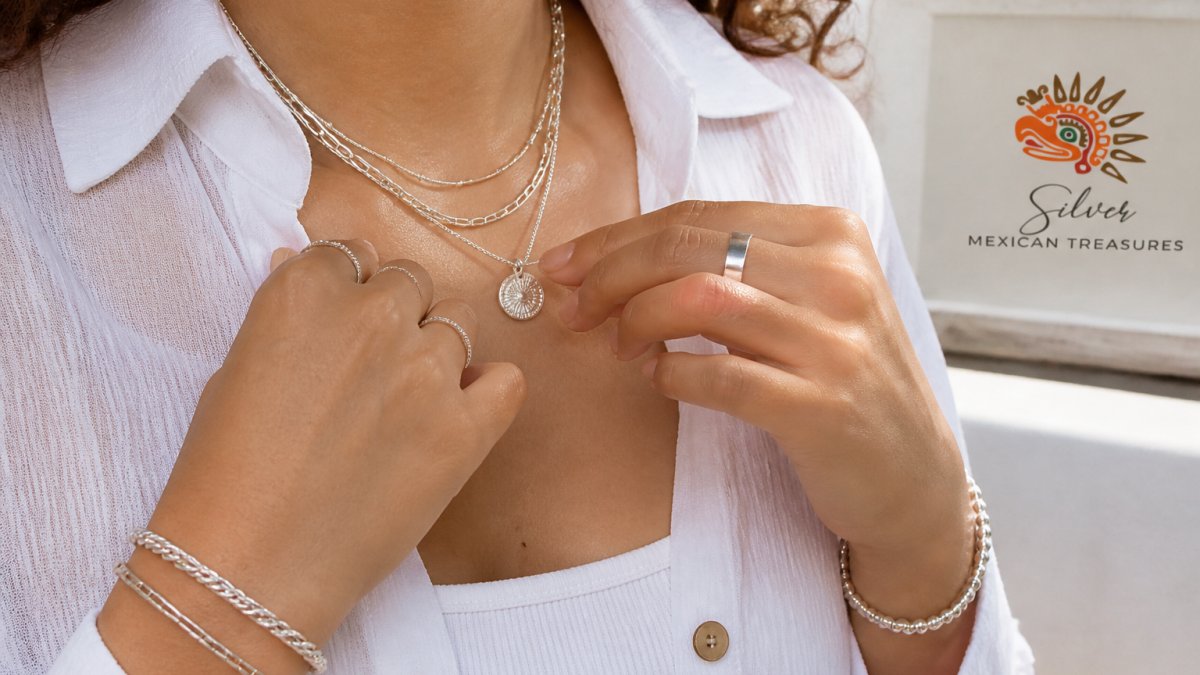
A quality sterling silver necklace is the foundation of everyday jewelry. It works with everything, casual shirts, office wear, evening outfits.
The Linked Chain from Silver Mexican Treasures offers exactly this: 45cm, handcrafted with a linked design. Wear it alone or layer it for dimension.
Thickness matters too: a chain around 2-3 grams feels substantial without being heavy, comfortable enough to forget you're wearing it.
Rings, Earrings, Bracelets, and Bangles
Rings take constant abuse, doorframes, pockets, daily pressure. Sterling rings hold up well, especially with a band at least 2mm thick.
Earrings are the easiest sterling pieces to wear daily. Sterling posts and backs won't irritate sensitive skin like cheaper metals.
Minimal Sterling Silver Bracelet - Lightweight Everyday Design in .925 Sterling →
Bracelets need strength because they flex constantly.
Bangles are solid bracelets without clasps, easy on and off for people who dislike closures.
The key across all pieces: choose construction over decoration.
How to Care for Sterling Silver Jewelry
Most sterling silver advice stops at "clean it and store it dry." What actually decides whether a piece lasts five years or twenty is when to take it off, which exposures matter, and what can be repaired versus replaced.
When to Remove Sterling Silver
The biggest factor in how long sterling silver lasts is when you take it off. It's durable but not indestructible.
- Chlorinated water (pools, hot tubs): Chlorine reacts with the copper in sterling, causing pitting and dull discoloration. Remove jewelry before swimming.
- Salt water and sand: Salt accelerates tarnish and sand scratches polished surfaces. Rinse and dry after beach exposure.
- Showers and baths: Soap scum builds in crevices and clasps, and heat and moisture speed tarnishing. Remove before showering.
- Exercise and heavy sweating: Sweat is mildly acidic and contains sulfur compounds that dull the finish. Rinse and dry after the gym.
- Household chemicals: Bleach, ammonia, and cleaning sprays attack alloy metals. Wear gloves or remove jewelry when cleaning.
- Perfume, lotion, sunscreen, and hair products: These leave residue that traps sulfur and dulls shine. Apply them first, let dry, then put jewelry on last.
Storage That Actually Prevents Tarnish
Tarnish is a surface reaction between silver and airborne sulfur; storage is about limiting that exposure.
- Keep pieces dry and separated. A dry drawer or jewelry box works; a bathroom counter does not.
- Use anti-tarnish strips or bags. Lined pouches or zip bags with a tarnish-inhibiting strip slow the reaction significantly. Silica gel helps with humidity but doesn't stop sulfur exposure alone.
- Store pieces individually. Chains tangle and scratch each other; a pouch or compartment per piece prevents both.
- Keep rubber bands and some plastics away. Certain rubber compounds release sulfur and accelerate tarnishing on nearby silver.
- Wear your pieces. The jewelry you wear most stays brightest, movement and skin contact gently polish the surface. Pieces left untouched for months tarnish fastest.
Daily Cleaning and Deep Cleaning
For routine care, a soft microfiber cloth is enough.
For light tarnish, a silver polishing cloth, impregnated with a mild compound and safe for regular use, does the job.
For heavier tarnish, a silver dip works but use it sparingly. Rinse thoroughly and dry completely.
Never use toothpaste, baking soda, or abrasive powders on sterling silver. Stick with products made for silver.
Ultrasonic cleaners work on plain metal. When in doubt, hand-clean.
Repairs, Resizing, and Lifetime Cost
Sterling silver is one of the more repairable jewelry metals.
- Chain repair: A broken link can usually be soldered or replaced by a jeweler at modest cost.
- Clasp replacement: Clasps fail most often. Replacing a worn spring ring with a lobster claw or box clasp is routine and often upgrades the piece.
- Ring resizing: Plain sterling bands can often be resized a size or two. Rings with stones, engraving, or hollow construction are harder or impossible to resize cleanly.
- Stone tightening: Prongs loosen with wear; tightening them before a stone falls out is far cheaper than replacing it.
- Bracelet and bangle adjustment: Solid bangles can sometimes be reshaped, but repeated bending weakens the metal. A bangle needing frequent adjustment is likely too thin for daily wear.
Think in cost per wear: a piece that costs more upfront but lasts ten years usually costs less per wear than a cheaper piece that fails in a year.
Maintaining Shine and Luster Over Time
Sterling silver naturally develops a slight patina over time. Some love the character; others prefer mirror-bright shine. Both are achievable.
- Polish with a silver cloth every few weeks for maximum shine.
- Use a dip only occasionally, never on pieces with glued stones or intentional oxidation.
- Avoid extreme temperature swings and prolonged direct sunlight, which accelerate tarnishing and can affect some finishes.
- Have a jeweler do a professional cleaning if tarnish builds in crevices or the piece is sentimental.
Regular cloth polishing prevents most professional work. The pieces that stay beautiful longest get a thirty-second wipe after each wear and a proper storage spot when they come off.
Canadian guidelines on safe handling of household cleaning chemicals
Balancing Durability, Shine, and Affordability
Durable sterling silver for everyday wear delivers on all fronts when you know what to look for: it costs less than gold or platinum, lasts longer than cheap plated alternatives, and keeps its shine with minimal effort.
The real trade-off is between quality and poor construction. A well-made one lasts decades.
Price reflects craftsmanship. Handcrafted pieces cost more than mass-produced ones because they're built to last.
At Silver Mexican Treasures, every piece is handcrafted by artisans who've perfected their craft over years.
The math works out: spend more upfront, wear it daily for years, and cost per wear becomes minimal.
Frequently Asked Questions
Is sterling silver durable enough for everyday wear?
Yes. Sterling silver (.925) is durable for daily wear because it combines 92.5% pure silver with 7.5% other metals (usually copper), which adds strength without sacrificing beauty. Pure silver alone is too soft for jewelry that experiences regular contact and friction. The alloy composition makes sterling silver resistant to bending and breaking while retaining the shine and elegance you want. Handcrafted pieces made by skilled artisans tend to last decades with proper care.
Can you wear sterling silver all day?
You can wear sterling silver all day, but protect it from prolonged exposure to moisture, perfume, lotion, and harsh chemicals. Remove it before swimming, showering, or using cleaning products. The metal itself won't degrade from skin contact, but these substances accelerate tarnishing and can dull the finish. Store your pieces in a dry place and polish gently with a soft silver cloth weekly or as needed to maintain shine. With these simple steps, your jewelry stays beautiful through years of daily wear.
Which sterling silver chain is strongest for everyday wear?
Chains with thicker gauge wire and solid link construction are strongest for daily wear. Look for chains with a gauge of 1.2mm or thicker and linked designs that distribute weight evenly across the chain. Snake chains and linked chains are particularly durable because the interlocking construction resists stretching and breaking. Handcrafted chains made by skilled artisans using traditional techniques tend to hold their integrity better than mass-produced alternatives.
How do you keep sterling silver from tarnishing?
Store sterling silver in a dry place away from air, moisture, and chemicals to slow tarnishing. Keep pieces in a sealed container or soft pouch when not wearing them. Avoid contact with perfume, lotion, and harsh cleaning products while wearing jewelry. Tarnish is a natural oxidation process that occurs over time, but regular polishing with a soft silver cloth removes it easily and restores shine. Lab-certified .925 sterling silver resists tarnish better than lower-quality alloys, making it a smart choice for pieces you want to keep beautiful long-term.
Sterling silver for everyday wear isn't a luxury. It's the practical choice for people who want jewelry that actually works. Silver Mexican Treasures creates handcrafted pieces that combine durability with authentic design, each piece lab-certified and built by artisans committed to quality. Explore the Collection and find pieces designed to become part of your daily routine.