
Sustainable Manufacturing in Jewelry: A 2026 Guide
Table of Contents
- What Is Sustainable Manufacturing in Jewelry?
- Jewelry Industry Environmental Impact and Why It Matters
- Ethical Jewelry Sourcing: Supply Chain Transparency and Verification
- Eco-Friendly Jewelry Materials: From Recycled Metals to Traceable Gemstones
- Circular Economy in Jewelry: Reuse, Repair, and Redesign
- Factory-Level Implementation: Manufacturing Processes and Worker Conditions
- Measuring Sustainability: Certifications, Lifecycle Assessment, and Transparency
- How to Choose Sustainable Jewelry That Aligns With Your Values
- Frequently Asked Questions
Last Updated: October 20, 2026
What Is Sustainable Manufacturing in Jewelry?
Sustainable manufacturing jewelry refers to production methods designed to minimize environmental harm, respect worker wellbeing, and maintain transparency throughout the supply chain.
Conventional jewelry production often relies on newly mined materials, energy-intensive refining, and opaque supply chains where workers remain invisible to the end consumer.
At Silver Mexican Treasures, we've built our entire operation around this principle. Every piece in our collection uses lab-certified .925 Taxco sterling silver handcrafted by Mexican artisans we work with directly.
This isn't just ethical positioning. When you understand where materials come from, who shaped them, and under what conditions, the piece carries meaning beyond aesthetics.
Jewelry Industry Environmental Impact and Why It Matters
The jewelry industry's environmental footprint is substantial.
Manufacturing itself is energy-intensive. Smelting, refining, casting, and finishing jewelry involves heating metals to extreme temperatures, shaping them, and polishing.
The problem compounds when you consider the alternative: recycled metals require far less energy to process.
Transportation and packaging add another layer. Sustainable manufacturers optimize packaging, use recyclable or compostable materials, and minimize the distance products travel.
Environmental impacts of mining and mineral extraction document these concerns at scale.
Ethical Jewelry Sourcing: Supply Chain Transparency and Verification
Ethical sourcing means knowing where materials originate and confirming that extraction, processing, and manufacturing meet documented standards. It demands systems that verify claims at each stage.
Chain-of-Custody Documentation
Chain-of-custody documentation tracks materials from source through production to the final product. Each handoff, from miner to refiner to manufacturer to retailer, is recorded, creating an auditable trail that proves the material's journey and confirms it meets specified standards.
For precious metals, these systems document weight, purity, and origin at each stage.
This isn't theoretical. When you purchase a piece from Silver Mexican Treasures, you're buying jewelry backed by documented sourcing. Our Taxco artisans work with suppliers whose materials are traceable.
Third-Party Certification and Auditing
Third-party certification adds independent verification. Supply chain auditors assess manufacturers against established standards, then issue certifications confirming compliance.
Responsible Jewellery Council (RJC) certification, for example, audits mining operations, refineries, and manufacturers against a code of practices covering labor standards, environmental management, and business ethics.
Lab certification for gemstones serves a similar function.
Our lab-certified .925 sterling silver carries documentation confirming its purity and composition. This certification protects you against counterfeit or misrepresented materials while supporting the artisans who crafted your piece.
Eco-Friendly Jewelry Materials: From Recycled Metals to Traceable Gemstones
Material selection is where sustainable manufacturing jewelry begins. The choice between recycled and newly mined materials, natural and lab-created gemstones, shapes the environmental and ethical profile of the finished piece.
Recycled Metals vs. Newly Mined Materials
Recycled metals eliminate the extraction phase entirely.
The energy savings are significant. Recycled silver requires approximately 65% less energy to process than newly mined silver. Recycled gold shows similar efficiency gains.
Newly mined materials require extraction, initial processing, and transportation before reaching the refinery, consuming substantial resources and generating waste.
Recycled metals are ideal for most jewelry applications and represent the more sustainable option when quality material is available.
Silver Mexican Treasures prioritizes recycled and responsibly sourced metals.
Conflict-Free and Lab-Certified Gemstones
Conflict-free gemstones originate from sources that don't fund armed conflict or exploit labor, with documentation tracing each stone from mine through the supply chain.
Lab-created gemstones offer an alternative that eliminates mining entirely. Lab-created diamonds, sapphires, and other stones are grown in controlled environments using technology that replicates natural formation processes.
Natural gemstones carry centuries of geological history and are preferred by collectors who value that authenticity.
Transparency matters in both cases. A credible jeweler discloses whether gemstones are natural or lab-created, conflict-free or traceable, and provides documentation supporting these claims.
Circular Economy in Jewelry: Reuse, Repair, and Redesign
Circular economy principles applied to jewelry extend product lifespan and reduce waste.
Reuse is straightforward: wearing inherited or vintage jewelry extends its life and honors its history, avoiding new production while carrying emotional significance beyond material value.
Repair extends product life when damage occurs.
Redesign transforms pieces that no longer suit your style into new creations: a vintage ring can become a pendant, outdated earrings remade into a bracelet.
Silver Mexican Treasures supports these principles through proper care guidance and durable design. Our handcrafted pieces are built to last decades with appropriate maintenance.
Factory-Level Implementation: Manufacturing Processes and Worker Conditions
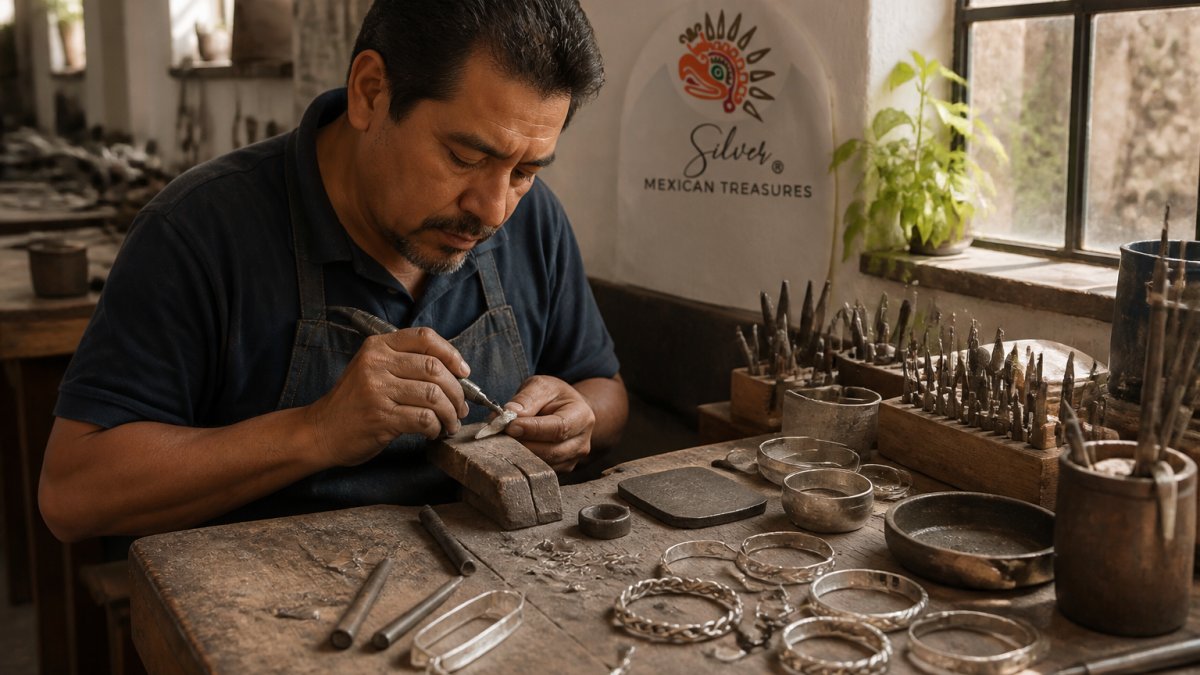
Sustainable manufacturing at the factory level involves optimizing energy and water use, managing chemical waste responsibly, and maintaining labor standards that respect worker dignity and safety.
Energy Consumption and Emissions Reduction
Manufacturing jewelry requires heating, shaping, polishing, and finishing, all energy-intensive processes. Sustainable factories reduce energy consumption through equipment upgrades, process optimization, and renewable energy adoption.
Aros Earrings – Handcrafted Wire Hoop Dangles in .925 Sterling Silver →
Modern kilns and furnaces operate more efficiently than older equipment, reducing fuel consumption for smelting and annealing.
Process optimization means examining each manufacturing step for inefficiencies: consolidating production runs to reduce idle time, improving ventilation, or refining casting techniques to minimize waste material.
Measuring energy consumption and tracking emissions creates accountability. Facilities that monitor their carbon footprint identify opportunities for improvement and can set reduction targets.
Water Use and Chemical Management
Jewelry manufacturing uses water for cooling, cleaning, and chemical processes. Sustainable operations minimize consumption and treat wastewater before discharge to prevent pollution.
Closed-loop water systems recirculate cooling water rather than drawing fresh supplies continuously. Wastewater treatment systems remove metal particles, chemicals, and other contaminants before the water is discharged or recycled.
Chemical management is equally critical. Polishing compounds and solvents require careful handling to prevent contamination and protect worker health. Sustainable facilities use less toxic alternatives where possible, store chemicals safely, and dispose of waste according to regulations.
Labor Standards and Artisan Wellbeing
Sustainable manufacturing prioritizes fair wages, safe working conditions, and respect for workers' rights. This extends beyond legal compliance to create environments where artisans can thrive.
Fair wages mean compensation that covers living expenses and reflects the skill required for the work. Artisans in Taxco, Mexico, for example, deserve wages that acknowledge their expertise in traditional silversmithing and support their families.
Safe working conditions include proper ventilation to protect against fumes, ergonomic workstations to prevent repetitive strain injuries, and access to protective equipment where needed.
Worker wellbeing extends to benefits like health insurance, paid time off, and opportunities for skill development.
Silver Mexican Treasures works directly with artisan partners who meet these standards. Our commitment to fair trade ensures that the artisans creating your jewelry receive fair compensation and work in safe, respectful environments.
Measuring Sustainability: Certifications, Lifecycle Assessment, and Transparency
Sustainability claims require measurement and verification. Certifications, lifecycle assessments, and transparent reporting provide mechanisms to substantiate these claims and prevent greenwashing.
Certifications from recognized organizations like Responsible Jewellery Council establish baseline standards and provide independent verification.
Lifecycle assessment (LCA) quantifies the environmental impact of a product across its entire life, from material extraction through manufacturing, transportation, use, and end-of-life.
Transparency reporting means publicly sharing information about sourcing, manufacturing practices, and environmental performance. Some manufacturers publish annual sustainability reports detailing their practices, challenges, and progress toward goals.
Greenwashing, making unsubstantiated sustainability claims, remains a risk in the jewelry industry.
How to Choose Sustainable Jewelry That Aligns With Your Values
Choosing sustainable jewelry involves evaluating materials, sourcing practices, manufacturer transparency, and alignment with your personal values.
Start by understanding what sustainability means to you. Does environmental impact matter most?
Request documentation. Ask manufacturers where materials originate, whether they're certified, and what labor standards govern production.
Look for certifications from recognized organizations. Third-party verification adds credibility to sustainability claims.
Examine the relationship between the brand and makers.
Consider durability and timelessness. A piece designed to last decades and remain stylistically relevant requires less frequent replacement.
Evaluate pricing in context.
Silver Mexican Treasures offers sustainable jewelry that aligns with these principles. Our Aros Earrings ($45.00) feature handcrafted .925 sterling silver in a sculptural design that works for everyday wear and special occasions. The Tallada Bracelet ($125.00) combines bold design with durable craftsmanship, built to remain beautiful for years.


Our commitment extends beyond individual products.
Sustainable manufacturing in jewelry represents a fundamental shift from extraction-based models to systems that prioritize environmental protection, worker dignity, and supply chain transparency. The choice to support brands committed to these principles, like Silver Mexican Treasures, means your jewelry reflects your values. International Labour Organization standards for artisan and craft work support this shift toward ethical practices globally.
Frequently Asked Questions
What does fair trade jewelry mean for artisans?
Fair trade jewelry ensures artisans receive direct, equitable payment for their work without exploitative middlemen. This model guarantees living wages, safe working conditions, and long-term partnerships. Artisans gain income stability, access to training, and recognition of their craftsmanship. When you purchase fair trade pieces like handcrafted Taxco sterling silver from direct artisan partnerships, your money directly supports skilled workers and their families, preserving traditional techniques and strengthening local economies.
How does recycled silver compare with newly mined silver?
Recycled silver eliminates the environmental damage of mining: no habitat destruction, no toxic chemical runoff, and 99% less energy consumption than newly mined silver. Both recycled and newly mined .925 sterling silver are chemically identical and equally durable. The key difference lies in environmental cost and supply chain transparency. Lab-certified recycled silver reduces greenhouse gas emissions significantly while supporting circular economy principles. Newly mined silver, by contrast, carries documented water pollution, chemical management risks, and mining impacts that persist long after extraction.
How can I verify that jewelry is actually ethically made?
Look for documented supply chain transparency, third-party certifications, and direct artisan partnerships. Verify certifications through independent bodies, not self-claimed labels. Ask manufacturers for chain-of-custody documentation showing material origin and production location. Lab certification (like The Silver Laboratory) confirms material authenticity. Brands with transparent websites listing artisan names, workshop locations, and fair trade commitments typically stand behind their claims. Direct relationships with makers, small-batch production, and willingness to answer specific questions about labor conditions and sourcing are strong trust signals.
What is circular manufacturing in the jewelry industry?
Circular manufacturing closes the material loop: metals and gemstones are recycled, repaired, or redesigned rather than discarded. This approach reduces waste, lowers energy consumption, and decreases demand for newly mined materials. In practice, jewelers accept old pieces for recycling, offer repair services to extend product life, and redesign damaged jewelry into new pieces. This model cuts environmental impact by 70-80% compared to linear production. Handcrafted jewelry, like Taxco sterling silver pieces made to last decades, naturally supports circularity through durability and timeless design, pieces become heirlooms rather than disposable items.
What are the major environmental impacts of jewelry manufacturing?
Jewelry production causes significant environmental damage through mining (habitat destruction, water pollution), smelting and refining (high energy use, greenhouse gas emissions), chemical processing, and waste generation. Gold mining alone produces 20 tonnes of waste per tonne of gold extracted. Water pollution from chemical leaching affects local ecosystems and communities. Energy-intensive manufacturing contributes to carbon footprint, traditional casting and shaping consume substantial electricity and fuel. Sustainable manufacturing addresses these through recycled materials, efficient processes, reduced chemical use, renewable energy, and waste minimization programs. Understanding these impacts helps consumers choose responsibly sourced alternatives.
Why does handcrafted sustainable jewelry cost more than mass-produced alternatives?
Handcrafted sustainable jewelry reflects true production costs: fair wages for skilled artisans, quality materials (often lab-certified or recycled), transparent supply chains, and responsible manufacturing practices. Mass production artificially lowers prices by cutting corners on labor, using lower-grade materials, or hiding environmental externalities. Handcrafted pieces like Taxco sterling silver earrings and bracelets are individually made, requiring hours of skilled labor. Sustainable practices add cost: certified materials, third-party audits, and ethical partnerships. However, durability justifies the investment, these pieces last decades, whereas cheaper alternatives tarnish, break, or require replacement, making sustainable jewelry more economical over time.
What certifications should I look for in sustainable jewelry?
Key certifications include Fairmined (for precious metals and gemstones), Responsible Jewellery Council (RJC) certification for ethical practices and supply chain transparency, and lab certification for material authenticity (like The Silver Laboratory for .925 sterling silver). Look for third-party verification rather than brand-created labels. Consejo Regulador de la Plata membership indicates regulated silver quality and artisan standards. Certifications should be independently audited and publicly verifiable. Brands transparent about their certifications and willing to provide documentation demonstrate genuine commitment. Avoid greenwashing: vague claims like 'eco-friendly' without backing evidence are red flags.